糸満大綱引きの撮影をさせていただいたことに、まず感謝を伝えたいと思う。
この行事に関わる多くの人たちの理解と協力があったからこそ、私はこうしてその様子を記録することができた。
そして何より、この町の人たちが長い時間をかけて守ってきた文化の中に、ほんの少しだけでも立ち会わせてもらえたことを、とてもありがたく思っている。
First, I would like to express my sincere gratitude for the opportunity to photograph the Itoman Great Tug-of-War.
It was made possible by the understanding and support of everyone involved in this event.
More than anything, I am truly grateful to have been allowed to witness — even in a small way — a culture that has been carefully protected and carried forward by the people of this town over many years.
本文
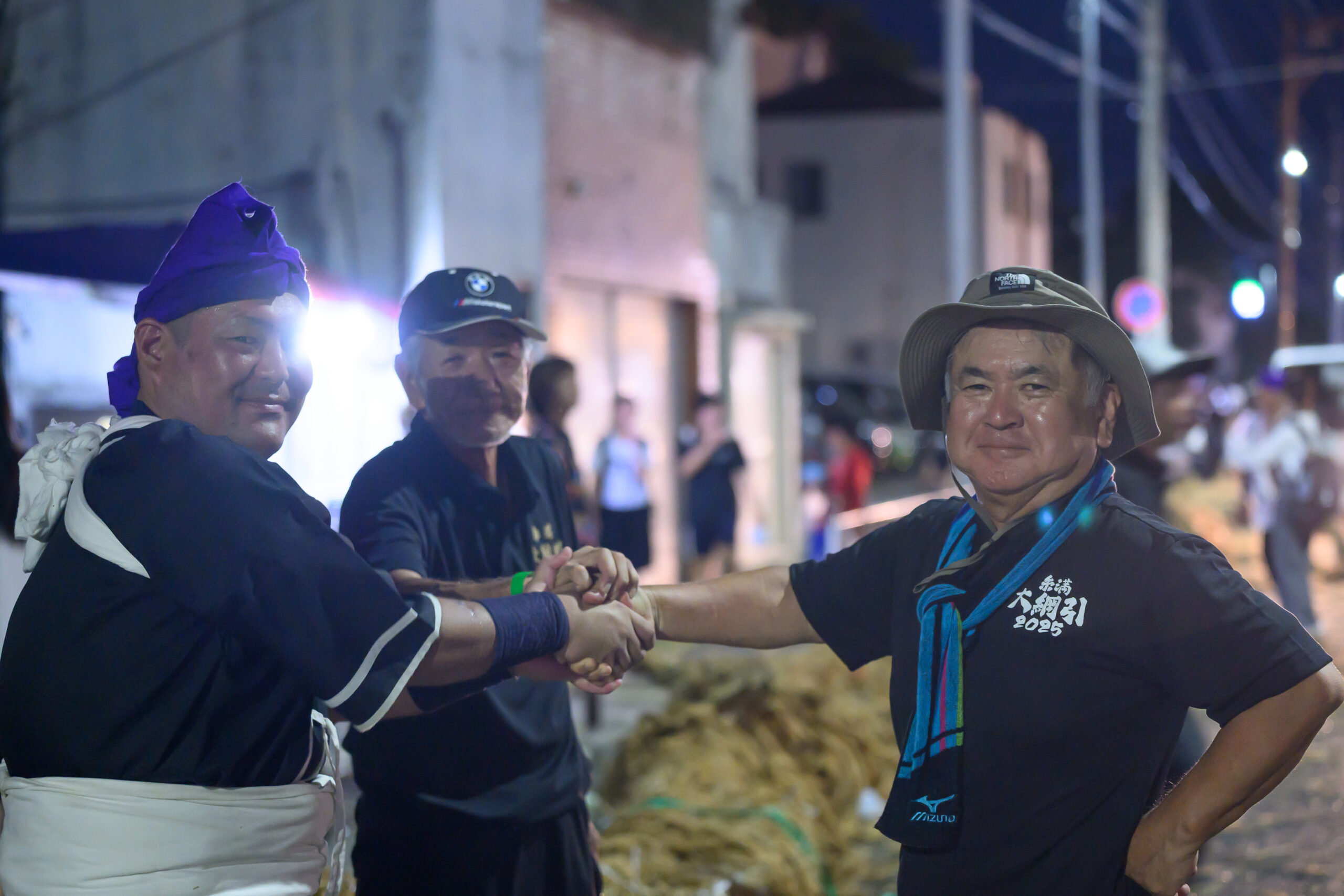
綱引きが終わると、熱気に包まれていた通りは、少しずつ落ち着きを取り戻していく。
けれど、それと同時にすぐに始まるのが片付けだった。
道のあちこちに散らばったわらを、高校生たちがほうきや手で集めていく。
さっきまで綱を引いていた人たちや、見物していた人たちも、自然とその片付けに加わっていた。
誰かが指示をしているわけでもなく、気がつけばみんなが掃除をしている。
それもまた、この行事の一部のように見えた。
綱もそのまま残されるわけではない。
巨大な大綱は、いくつかの部分に分けられ、クレーンによってトラックへと積み込まれていった。
その作業が行われていたのは、午後七時ごろだったと思う。
朝から続いていた行事が、ようやく終わりに近づいていく時間だった。
そして、もう一つ面白い風習がある。
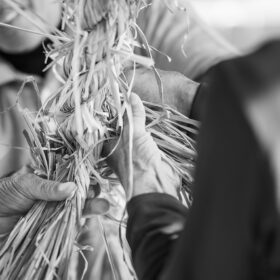
綱の一部を持ち帰ると、金運や安全、商売繁盛のご利益があるとされているのだという。
人々は鎌で短く切ってもらった綱を手に取り、それを家の玄関などに飾る。
私もその綱を少しだけ分けていただいた。
この行事に関わった小さな証のようなものだ。
翌朝、もう一度その道を通ってみると、そこには驚くほど何も残っていなかった。
前日の賑わいが嘘のように、道路はきれいに掃除されていた。
わら一つ落ちていない。
朝から夜まで続いた行事が終わり、片付けまできちんと終わらせて、町はまたいつもの日常に戻っていく。
その姿を見て、改めて思った。
この行事は、ただのイベントではないのだと。
町の人たちが力を合わせて準備し、祈り、引き、そして片付ける。
そうやって、毎年繰り返されてきた営みなのだ。
文化や風習というものは、人と人が「知り合う」ためのとても大きな役割をもっていると、私は思っている。
その土地を知ること。
その土地で生きる人を知ること。
そして互いを尊重すること。
そのために文化は大きな役割を果たす。
私は旅をしながら写真を撮っている。
そして、こうした文化や人の営みに触れるたびに、それを知りたいと思うし、できるならば伝えたいとも思う。
今回この行事に関わらせてもらう中で、もう一つ感じたこともある。
実行委員会の中には、若い世代がそれほど多くはないようにも見えた。
また、糸満で生まれ育った人の中にも、この行事のことをあまり知らないという人がいる、という話も耳にした。
もちろん、この文化がすぐになくなるわけではないと思う。
けれど、記録として残していくこともまた、大切なことなのではないかと感じた。
私の写真が、ほんの少しでもこの文化の記録となり、これからも糸満でこの行事が続いていくための小さな一助になれば、とても嬉しく思う。
もし、この写真や文章を読んで
「いい記録だな」
「こういう文化が残ってほしいな」
そう思っていただけたなら、とても嬉しいです。
そして、もしよろしければ、私の活動を応援していただけるとありがたいです。
写真を撮り、文化を記録し、伝えていくことを、これからも続けていきたいと思っています。
写真-PHOTOS-
ちなみ写真は少なめである。
暗さが私のカメラの限界値でを超えていたからである。
なので数枚だけ。


運ばれていった。
注記
本作品は、糸満大綱引きという地域文化の記録および文化継承の一助となることを願い、制作しています。
撮影は糸満大綱引き実行委員会関係者のご理解と許可をいただいたうえで行っています。
写真の掲載について、もし不都合や問題等がございましたら、速やかに対応いたしますので、ご連絡いただけますと幸いです。
(info@yoshihiro-hirose.org)
本作品の無断転載・複製はご遠慮ください。
ENGLISH
Itoman Great Tug-of-War 2025 — Chapter 8: After the Festival (October 6, 2025, Night)
After the tug-of-war ends, the streets that had been filled with excitement gradually begin to settle.
But at the same time, cleanup begins almost immediately.
Straw scattered across the road is gathered by high school students using brooms and their hands. People who had been pulling the rope, as well as those who had been watching, naturally join in.
No one gives instructions, yet before long, everyone is cleaning.
It felt as though this, too, was part of the event.
The rope is not left as it is.
The massive rope is divided into several sections and loaded onto trucks using cranes.
I believe this work was taking place around 7 p.m.
It was the time when the events, which had continued since morning, were finally coming to an end.
There is also another interesting custom.
It is said that taking home a piece of the rope brings good fortune — wealth, safety, and success in business.
People receive small pieces cut with sickles and place them at the entrance of their homes.
I was also given a small piece.
It felt like a small proof of having been part of this event.
The next morning, I walked along the same road once again.
There was almost nothing left.
As if the liveliness of the previous day had been a lie, the road had been completely cleaned.
Not even a single piece of straw remained.
After a full day of events, from morning until night, everything had been properly concluded, and the town had quietly returned to its usual daily life.
Seeing this, I felt it once again.
This is not just an event.
The people of the town prepare together, pray together, pull together, and then clean up together.
In this way, the practice has been repeated year after year.
I believe that culture and tradition play a significant role in allowing people to come to know one another.
To understand a place.
To understand the people who live there.
And to respect one another.
For that, culture serves an essential purpose.
I travel and take photographs.
And each time I encounter cultures and ways of life like this, I feel a desire to understand them — and, if possible, to share them.
There was something else I felt during this experience.
It seemed that there were not many younger people involved in the organizing committee.
I also heard that even among those born and raised in Itoman, there are people who do not know much about this event.
Of course, I do not think this culture will disappear anytime soon.
But I felt that preserving it as a record is also important.
I would be very happy if my photographs could serve, even in a small way, as a record of this culture — and perhaps contribute, however slightly, to its continuation in Itoman.
If, through these photographs and words, you feel
“This is a valuable record,”
“I hope this kind of culture continues,”
that would mean a great deal to me.
And if you feel inclined, I would be grateful for your support.
I hope to continue photographing, documenting, and sharing cultures like this in the future.
—
Other articles in this series can be found in the magazine.
For activities and profile:
https://yoshihiro-hirose.org
—
All photographs and texts published here are copyrighted by the photographer.
Unauthorized reproduction, duplication, or use is strictly prohibited.
If there are any concerns regarding the publication of photographs, please feel free to contact me and I will respond promptly.
info@yoshihiro-hirose.org