舞踊や音楽には、
その土地の歴史や文化が現れる。
それは言葉で説明されるものではなく、
身体の動きや音の流れの中に
静かに表れてくるものだ。
琉球の舞踊にも、
そうしたものが流れているように感じる。
本文
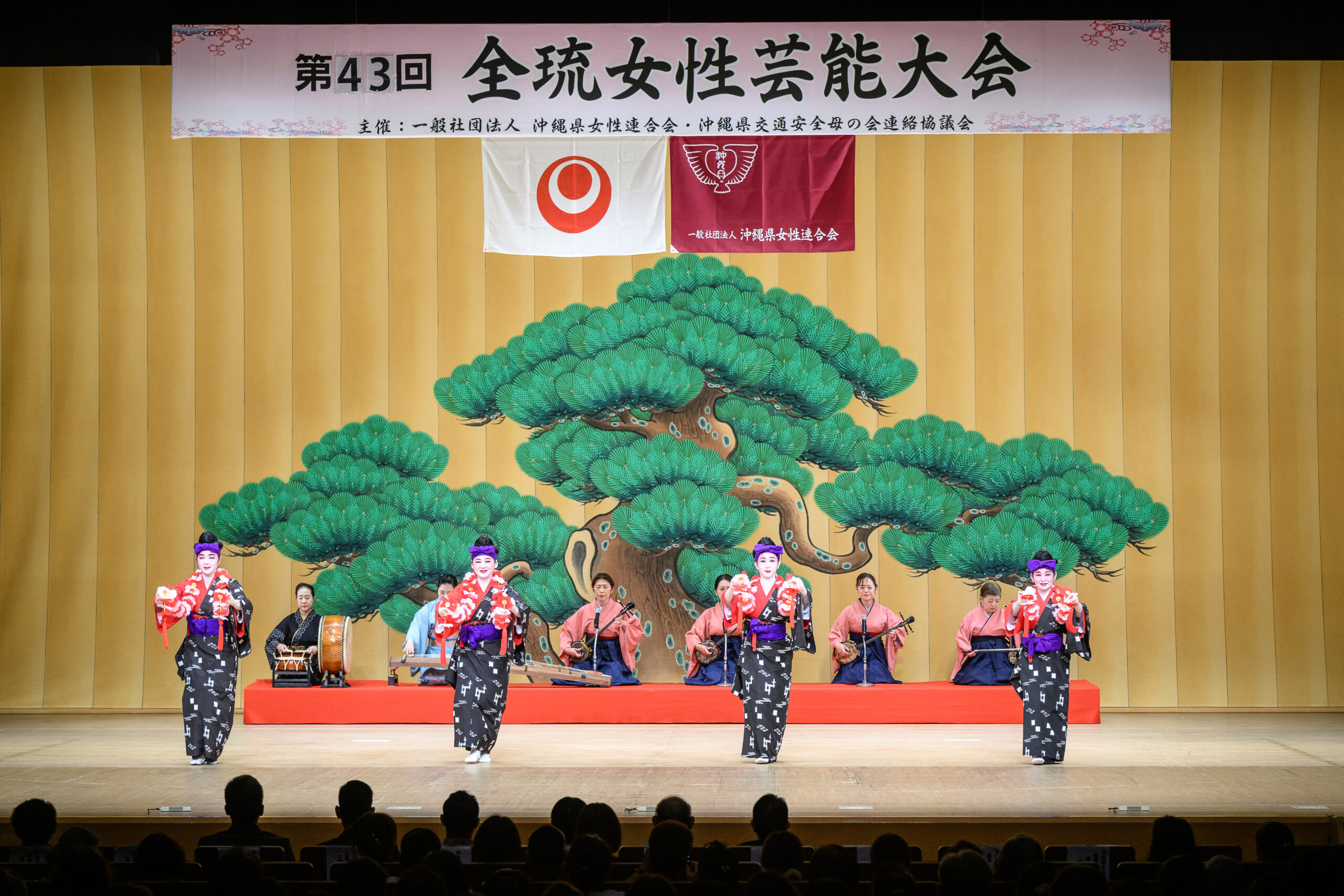
2026年2月28日。
国立劇場おきなわ。
この日は、
沖縄県女性連合会主催の
全琉女性芸能大会の本番だった。
司会の挨拶があり、
舞台の幕が上がる。
沖縄の舞台では、
幕開けに「かぎやで風」が演じられることが多い。
この日も、
その音楽とともに舞台が始まった。
三線、胡弓、琴、太鼓。
静かに音が重なり、
舞台の空気が整っていく。
⸻
その後、
「武富節」と「南嶽節」が続く。
この演目では、
無憂華の会の踊り手たちが舞台に立つ。
舞台を見ながら、
改めて琉球舞踊の美しさを感じていた。
動きはとても穏やかだ。
けれど、
一つ一つの所作が
とても丁寧に作られている。
手の動き。
足の運び。
姿勢。
どれもが
しなやかで美しい。
私は舞踊の専門家ではない。
けれど、
その動きの美しさは
はっきりと伝わってくる。
ゆっくりとした動きの中に、
強い集中がある。
その静かな集中が、
舞台全体の空気を作っているように感じた。
⸻
ここは沖縄で
最も大きな舞台の一つ、
国立劇場おきなわだ。
その舞台で
琉球舞踊を見て、
写真を撮れるということは、
とてもありがたいことだと思う。
そして、
一つの村の人たちが集まり、
こうして舞台に向かって真剣に取り組んでいる。
それは決して
職業としての舞台ではないかもしれない。
けれど、
その真剣さには
やはり心を動かされるものがあった。
日々の暮らしの中で
積み重ねてきた時間があり、
その時間が
この舞台に繋がっている。
そういう時間の重なりを、
私は舞台の中に感じていた。
⸻
琉球王国は、
外交や交易を通じて
国を発展させてきた海の王国だったと言われている。
もちろん、
まったく武力を持たなかったわけではない。
けれど、
国の在り方として重んじられていたのは
武力よりも外交や交易だった。
その中で、
芸能はもてなしの文化として
大切な役割を担っていた。
穏やかな音楽。
しなやかな舞踊。
もし当時、
外国から来た人がこの舞踊を見たら、
きっと攻撃的な印象は持たないだろう。
むしろ、
美しい。
穏やかだ。
そんな印象を抱いたのではないだろうか。
琉球の舞踊には、
そうした文化の背景が
静かに流れているように思う。
⸻
今回、稽古や舞台を撮影させてもらったことで、
私は琉球舞踊というものに
触れる機会をいただいた。
稽古の時間。
舞台に向かう時間。
そして、本番の舞台。
そのすべての時間の積み重ねが、
あの舞台の美しさを作っているのだと思う。
舞台の上にあるのは、
ほんの数分の踊りかもしれない。
けれどその背後には、
長い時間の積み重ねがある。
その時間の一部を
こうして写真として残す機会をいただけたことを、
とてもありがたく思っている。
Team 北中城村のみなさん、
無憂華の会のみなさん、
そして関係者のみなさんに、
心から感謝したい。
ありがとうございました。
写真

といえば「かぎやで風節」
(舞台左側から、太鼓:石川詩子さん、箏:與儀亜衣林さん、
歌三線:奥間智香枝さん 比嘉いづみさん 玉城若子さん
胡弓:与儀美津江さん)


全てが美しい。

一糸乱れぬその踊りは圧巻だ。


素晴らしい撮影たいけんだった。

舞台中央にいる比嘉いづみさんの笑顔が印象的だった。
⸻
この記録はシリーズとして続いています。
他の記事はマガジンから読めます。
活動やプロフィールはこちら
https://yoshihiro-hirose.org
⸻
「Soul Journey」は
廣瀬義啓(Yoshihiro Hirose)による
写真ドキュメンタリーシリーズです。
本シリーズは、
写真家による芸術表現であると同時に、
地域文化の記録や文化継承の一助となることを願って制作しています。
掲載している写真および文章の著作権は
すべて撮影者に帰属します。
無断転載・複製・使用はお断りしています。
なお、写真の掲載について
ご都合等の問題がございましたら、
速やかに対応いたしますので、
下記までご連絡いただけますと幸いです。
info@yoshihiro-hirose.org
© Yoshihiro Hirose
ENGLISH
Dance and music often reveal
the history and culture of a place.
It is not something that can be fully explained in words.
Rather, it quietly appears
in the movement of the body
and in the flow of sound.
I feel that something like this
also runs through Ryukyuan dance.
February 28, 2026
National Theatre Okinawa
On this day,
the All Ryukyu Women’s Performing Arts Festival,
organized by the Okinawa Prefecture Women’s Association,
was held.
After the opening greeting by the host,
the curtain of the stage rose.
On Okinawan stages,
“Kajadefu” is often performed at the opening.
On this day as well,
the performance began with that music.
Sanshin, kokyu, koto, and drums.
The sounds quietly layered together,
and the atmosphere of the stage slowly settled.
After that,
“Taketomi Bushi” and “Nangaku Bushi” followed.
In these pieces,
the dancers of Muyuge no Kai came onto the stage.
Watching the performance,
I once again felt the beauty of Ryukyuan dance.
The movements are very calm.
But every gesture
is carefully shaped.
The movement of the hands.
The steps of the feet.
The posture.
Each of them
is graceful and beautiful.
I am not a specialist in dance.
But the beauty of those movements
is clearly conveyed.
Within the slow movement
there is a strong concentration.
And that quiet concentration
seems to shape the atmosphere of the entire stage.
This place is
one of the largest stages in Okinawa,
National Theatre Okinawa.
To watch Ryukyuan dance
and photograph it on this stage
felt like a great privilege.
People from one village gather
and seriously work toward a stage like this.
It may not necessarily be
a professional performance.
But their sincerity
was something that deeply moved me.
There is time accumulated
in everyday life.
And that time
connects to this stage.
I felt that accumulation of time
within the performance.
The Ryukyu Kingdom
is often described as a maritime kingdom
that developed through diplomacy and trade.
Of course,
it did not exist completely without military power.
But as a way of governing the country,
diplomacy and trade
were valued more than military force.
Within that context,
performing arts played an important role
as a culture of hospitality.
Gentle music.
Graceful dance.
If visitors from foreign lands
had watched these dances at that time,
they probably would not have felt
an aggressive impression.
Rather, they might have thought,
It is beautiful.
It is peaceful.
Perhaps they felt something like that.
I feel that
the cultural background of the Ryukyu Kingdom
still quietly flows within these dances.
Through photographing the rehearsals and the stage this time,
I was given the opportunity
to encounter Ryukyuan dance.
The time of rehearsal.
The time moving toward the stage.
And the performance itself.
All of these moments together
create the beauty of that stage.
What appears on stage
may only be a few minutes of dance.
But behind it
there is a long accumulation of time.
I feel very grateful
to have had the chance
to record a small part of that time
through photography.
To everyone in Team Kitanakagusuku,
to the members of Muyuge no Kai,
and to all the people involved,
I would like to express my sincere gratitude.
Thank you very much.