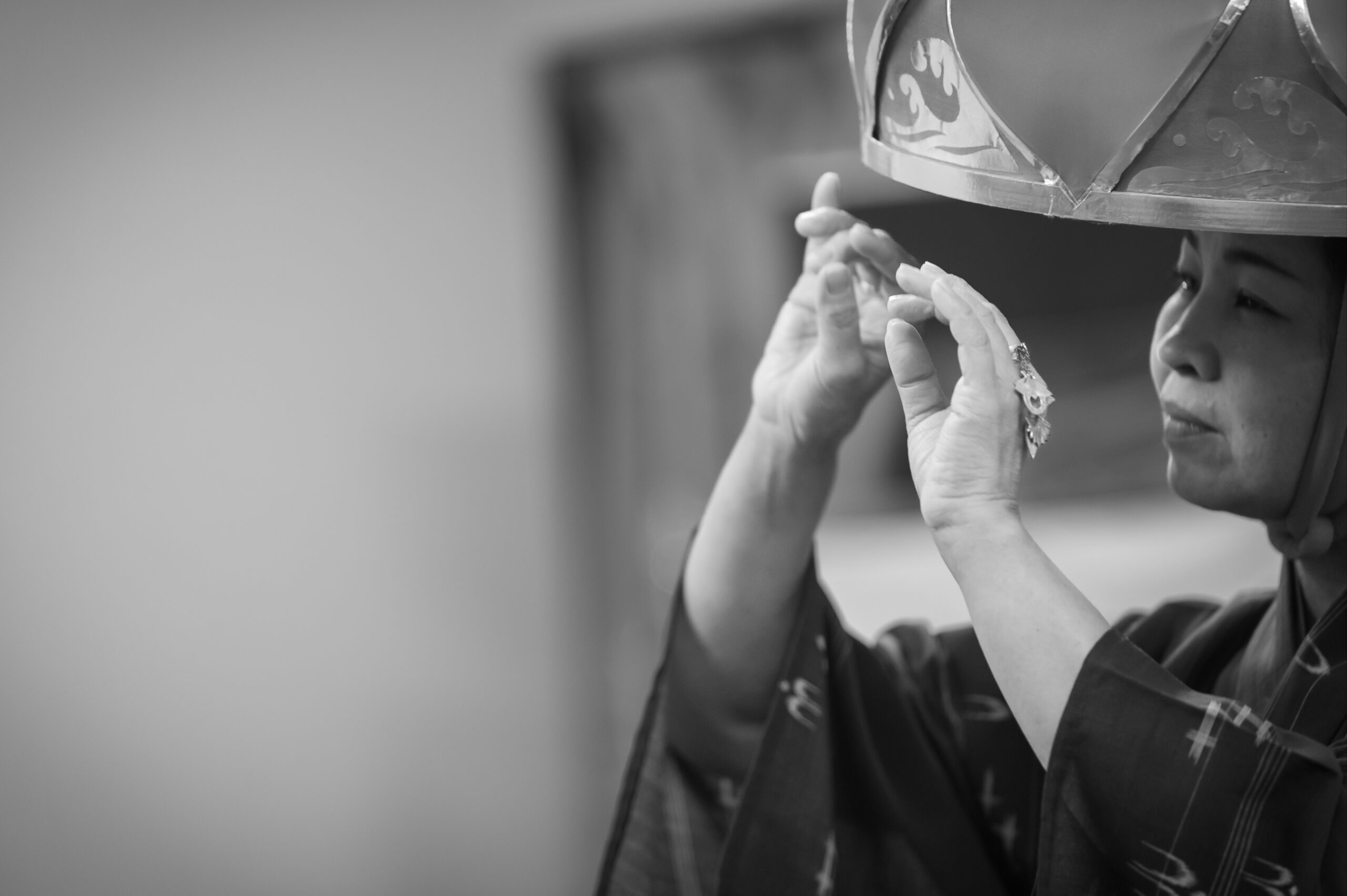
琉球舞踊と琉球古典音楽の稽古を見学した。
その場で見たのは、振りや音だけではなく、長い時間をかけて受け継がれてきたものと、それをいまも積み重ね続けている人たちの姿だった。
ある手の動きと、ある時間の感覚が、強く残っている。
What I witnessed there was not just movement and sound,
but something that had been passed down over a long stretch of time,
and the presence of those who continue to build upon it even now.
A certain movement of the hand,
and a certain sense of time,
have stayed with me.
本文
山田多津子先生の道場に入る前、入り口で比嘉いづみさんに「正座をして礼をしますからね」と言われた。
わかっていたはずのことなのに、その一言で急に現実味が増した。
緊張感が、一段階上がった。
中に入ると、思っていた空気とは少し違っていた。
張り詰めているというより、和やかだった。
笑い声もあった。
人の温度が、そのままある空間だった。
少し拍子抜けした感覚もあった。
けれど、それが逆に自然だった。
正座をして礼をする。
畳の上に座る。
場の中に、静かに入っていく感覚があった。
比嘉いづみさんが、今回の演目の歌詞について説明をしてくれた。
いくつかの情景の説明があった。
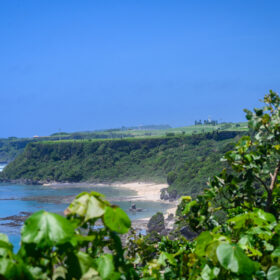
その中で、特に印象に残ったのは、恩納節の中で歌われる恩納岳の情景だった。
そこにかかる雲の話だった。
恩納節について改めて調べてみた。
恩納節は、恋の歌だ。
恩納の番所の松の木の下には、注意書きの立て札がある。
決まりごとが書かれている場所。
守らなければいけないものがある場所。
けれど、それは本当に、恋までも禁じているのだろうか。
籬の内に咲く花も、匂いを誰にも止められない。
香りは、外へと漏れ出していく。
隠そうとしても、隠しきれるものではない。
想いもまた、同じなのだと思う。
逢うこともできず、ただ引き返す帰り道。
恩納岳を見上げると、白い雲がかかっている。
その雲は、視界を遮る。
そして同時に、想いを強くする。
一目、会いたい。
その気持ちは、どうにもならない。
ただ、募っていくばかりだ。
(参照:https://mabui.jp/unnaudui-nufabushi/#st-toc-h-4)
その想いは、胸の中に留まるだけではない。
どこかで、外へと向かおうとする。
見上げた先の雲に向かって、そっと手を差し出す。
風を起こすように、動かす。
実際に雲を動かすことはできないとわかっていながら、それでも「どいてほしい」と願う。
その気配ごと、表しているということらしい。
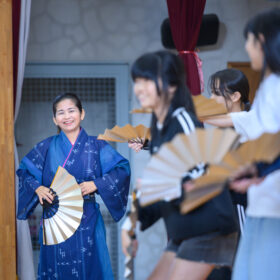
その流れの中で、山田多津子先生が、その動作を実際にやって見せてくれた。
見上げた先の雲に向かって、そっと手を差し出す。
風を起こすように、動かす。
その瞬間、目が止まった。
手首に関節がないんじゃないか、という言い方では足りない気がした。
本当にしなやかだった。
どこにも引っかかりがない。
ただ、流れている。
柔らかな風が、そのままそこに吹いているようだった。
その風に、何かがそっとなびいているような感覚だった。
目を閉じると、その情景が浮かんでくる。
恩納岳にかかる雲。
それが、風に流されていく。
そしてその風は、自然に吹いているものなのか。
それとも、手の中から生まれているものなのか。
わからなくなる。
その曖昧さごと、そのままそこにあった。
ただの動きではなかった。
そこにあったのは、時間だった。
人生をかけて、この伝統を受け継いできた時間だった。
この一つの動きの中に、人生を捧げてきた生き様が、そのまま現れていた。
そのあとに「こうなっちゃうのよね」と言って、簡易的な動きを見せてくれた。
さっきの動きとは明らかに違う。
少し崩れた動きだった。
習った人が、また別の人に伝える。
その繰り返しの中で、少しずつ変わってしまう。
だからこそ、確認する場が必要になる。
創作ではなく、継承。
だからこそ、守らなければいけないものがある。
その話を聞きながら、あの手の動きが、私の脳に刻み込まれていった。
熱く。
深く。
深く。
しばらくして、気づいたら空気が変わっていた。
合図があったわけではない。
ただ、すっと場が整った。
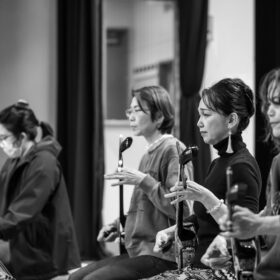
そして、稽古が始まっていた。
比嘉いづみさんの音に合わせて、瀬名波牧さんの動きが重なっていく。
同じ演目でも、毎回まったく同じではない。
歌い方の癖。
間の取り方。
呼吸の違い。
そのわずかなズレを確認しながら、少しずつ合わせていく。
揃えるというより、すり合わせていく。
そんな感覚に近かった。
一通り、福州園で披露する演目の稽古が終わった。
そのあと、別の舞台で瀬名波牧さんが披露する踊りの稽古に移った。
山田多津子先生が、比嘉いづみさんに「これ弾ける?」と声をかける。
比嘉いづみさんは少し考えながら、「普段歌っている歌詞と違うからなあ」と言った。
それでも、弾き始めた。
普段歌っている歌詞と、今回の踊りに合わせる歌詞は違う。
それでも、その場で合わせていくことができる。
それは、これまで積み重ねてきたものがあるからだと思った。
瀬名波牧さんも、比嘉いづみさんも、それぞれ師匠がいる。
その人たちから受け継いできたものがある。
その上に、自分の時間を重ねている。
瀬名波牧さんも、自分の人生を捧げている。
比嘉いづみさんも、自分の人生を捧げている。
その積み重ねが、ここにある。
正座をして一時間をゆうに超えていた。
感覚は、とっくになくなっていた。
もはや、自分の足がどこかに飛んでいってしまったかのようだった。
ここで立ち上がったらどうなるのか。
少し試したい気持ちもあった。
けれど、それはあまりにもこの場の空気を壊しそうだった。
だからやめておいた。
それでも、不思議と意識は足には向かなかった。
最初に見た、あの手の動き。
それが、ずっと頭の中に残り続けていた。
あの柔らかさ。
あの流れ。
その中にあった時間。
そして、それを受け継ぎ、今も積み重ね続けている二人の姿。
その二人の舞台が見られる機会が、3月27日、沖縄県那覇市福州園で行われる。
この稽古を見たことで、その舞台が、より一層楽しみで仕方がなくなった。
ちなみに、この文章は、比嘉いづみさんにも瀬名波牧さんにも、そして山田多津子先生にも確認していただいてはいない。
皆さん忙しいからだ。
途中で自分なりに調べながら書いている。
ただ、その正確さについては保証できない。
あくまで、この日に私が見て、感じたこととして受け取ってもらえたらと思う。

【公式】福州園福州園は、中国福建省福州市と那覇市の友好都市締結10周年と那覇市市制70周年を記念し開園した福州式と呼ばれる美しい庭園ですwww.fksn-okinawa.jp
⸻
このシリーズの他の記事はマガジンからご覧ください。
活動やプロフィールはこちら
https://yoshihiro-hirose.org
⸻
掲載している写真および文章の著作権は
すべて撮影者に帰属します。
無断転載・複製・使用はお断りしています。
なお、写真の掲載について
ご都合等の問題がございましたら、
速やかに対応いたしますので、
下記までご連絡いただけますと幸いです。
info@yoshihiro-hirose.org
写真-PHOTOS-


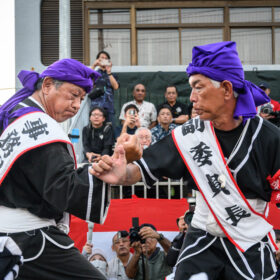
始まればいっきに空気が変わる。

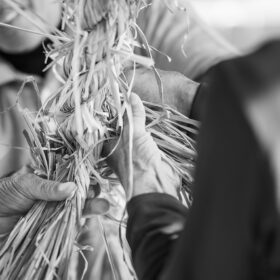
人生の積み重ねを手の表情に感じる。

恩納節の切ない恋心を伝えてくれる。

「一目会いたい」


山田多津子先生の雰囲気がもう感動する。


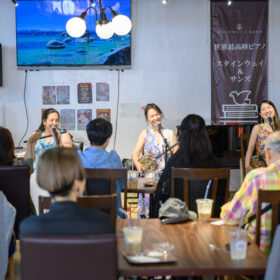
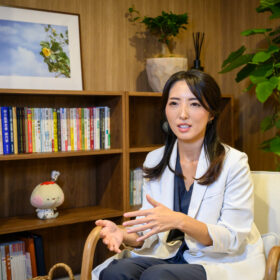
いづみさんの写真はこの画角のみ。

(手前は石川詩織さん)


ENGLISH
As the Clouds Were Stirred, the Feeling in My Feet Drifted Away
(from “Onna Bushi”)
What I Witnessed at a Ryukyu Dance and Classical Music Rehearsal
(March 18, 2026)
Before entering Yamada Tatsuko-sensei’s studio,
Izumi Higa said to me at the entrance,
“You’ll need to sit in seiza and bow.”
I thought I already understood that.
And yet, hearing it said aloud suddenly made everything feel more real.
My tension rose, one level higher.
Inside, the atmosphere was different from what I had expected.
It was not tense.
It was gentle.
There was laughter.
A space where the warmth of people simply existed.
I felt slightly caught off guard.
And yet, that felt natural.
I sat in seiza and bowed.
I took my place on the tatami.
It felt as though I was quietly entering into the space itself.
Izumi Higa explained the lyrics of the piece.
She spoke of several scenes.
Among them, what stayed with me most
was the image of Mount Onna in Onna Bushi.
And the clouds that hang over it.
Onna Bushi is a song of love.
The pain of nights when one cannot meet.
The doubt that the other’s heart may have turned elsewhere.
Resentment.
And yet, a feeling that does not disappear.
Even so, people move toward one another.
They go, even in secret.
That is the way of those who are in love.
Beneath the pine tree at the Onna village office,
there stands a sign.
A place where rules are written.
A place where something must be obeyed.
And yet,
can love itself truly be forbidden?
Flowers blooming behind a fence cannot be stopped.
Their fragrance drifts outward.
No matter how one tries to hide it,
it cannot be contained.
Feelings are the same.
Unable to meet,
one turns back.
On the way,
looking up at Mount Onna,
white clouds hang above it.
They block the view.
At the same time,
they deepen the longing.
I want to see you. Just once.
That feeling cannot be helped.
It only continues to grow.
That feeling does not remain within the chest.
Somewhere,
it begins to move outward.
Toward the clouds above,
a hand is gently extended.
It moves, as if to stir the wind.
Even knowing the clouds cannot be moved,
there is still a wish—
to have them drift away.
That entire presence
is what is being expressed.
Within that flow,
Yamada Tatsuko-sensei showed the movement.
A hand reaches upward,
as if to stir the wind.
In that moment,
my eyes stopped.
To say her wrist had no joints would not be enough.
It was truly supple.
There was no resistance.
It simply flowed.
It felt as though a soft breeze itself was there.
And something was gently swaying within it.
When I closed my eyes,
the image appeared.
Clouds over Mount Onna.
Drifting in the wind.
And that wind—
whether it was something natural,
or something born from the hand—
I could no longer tell.
That ambiguity itself
remained.
It was not just a movement.
What existed there
was time.
Time spent devoting a life
to inheriting this tradition.
Within that single gesture,
a way of living—
a life given over to this—
was revealed as it was.
After that, she said,
“This is what it tends to become,”
and showed a simplified version.
It was clearly different.
Slightly broken.
What is learned
is passed on to another.
And then again.
In that repetition,
things gradually change.
That is why there must be moments to check.
This is not creation.
It is transmission.
And because of that,
there are things that must not be altered.
As I listened,
that movement of the hand was engraved into my mind.
Hot.
Deep.
Deep.
At some point,
I noticed the air had changed.
There was no signal.
The space simply gathered itself.
And the rehearsal began.
To the sound of Izumi Higa,
the movements of Maki Senaha followed.
Even with the same piece,
it is never exactly the same.
Each has their own phrasing.
Their own timing.
Their own breath.
They adjusted,
little by little.
It felt less like matching,
and more like feeling into each other.
They finished rehearsing the pieces for the performance at Fukushūen.
Then moved on to another piece.
Yamada-sensei asked,
“Can you play this?”
Higa paused, then said,
“The lyrics are different from what I usually sing.”
And then, she began to play.
The lyrics she usually sings
and the lyrics for this dance are different.
And yet,
she was able to adapt in that moment.
That was possible
because of everything she had accumulated.
Both Senaha and Higa have their own teachers.
They have inherited what was passed down.
And layered their own time upon it.
They have devoted their lives to this.
And they continue.
That accumulation
was present here.
More than an hour had passed in seiza.
The sensation in my legs
had long disappeared.
It felt as though they had drifted somewhere far away.
I wondered, briefly,
what would happen if I stood up.
But it felt like it would disturb the space.
So I didn’t.
And yet,
my attention was not on my legs.
That movement of the hand
remained.
Its softness.
Its flow.
The time within it.
And the two
who have inherited it,
and continue to build upon it.
Their performance will take place
on March 27,
at Fukushūen in Naha, Okinawa.
Having witnessed this rehearsal,
I now find myself
looking forward to that stage
more than I can quite explain.
This piece has not been reviewed
by Izumi Higa, Maki Senaha,
or Yamada Tatsuko-sensei.
Simply because they are busy.
I have written this while researching on my own.
But I cannot guarantee its accuracy.
I hope it can be received
as what I saw and felt on that day.
—
Other articles in this series can be found in the magazine.
For activities and profile:
https://yoshihiro-hirose.org
—
All photographs and texts published here are copyrighted by the photographer.
Unauthorized reproduction, duplication, or use is strictly prohibited.
If there are any concerns regarding the publication of photographs, please feel free to contact me and I will respond promptly.
info@yoshihiro-hirose.org