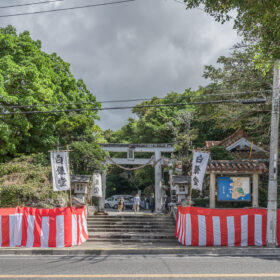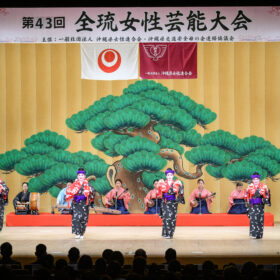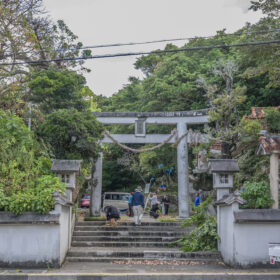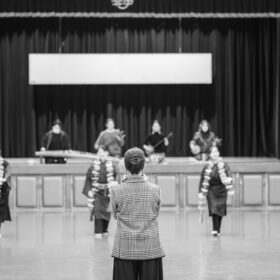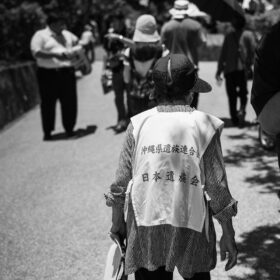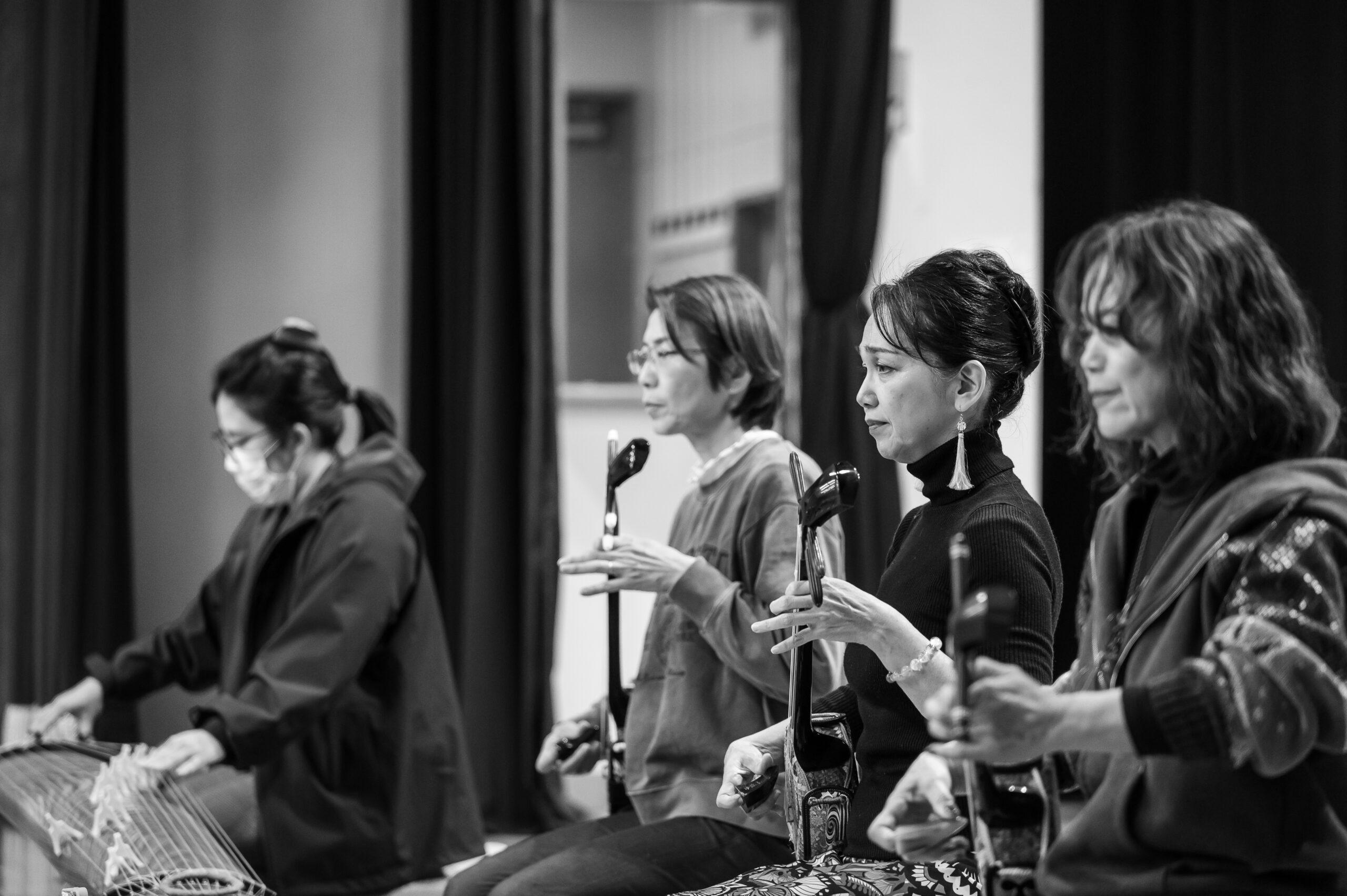
北中城村中央公民館での稽古を撮影したのは、
2月11日と2月18日の二日間だった。
2月11日は夜7時から。
そして2月18日は、夜9時から10時。
そんな遅い時間に人が集まり、
踊りと音楽の稽古が始まる。
仕事や家庭もあるだろう。
それでもこうして時間を作り、
稽古を重ねている。
文化というものは、
こういう時間の積み重ねの中で
静かに続いているのだと思う。
本文(2026年2月11日)
2月11日、北中城村中央公民館に到着すると、
比嘉いづみさんが
私のことを「お弟子さん」と紹介してくれた。
実はその時すでに、
三線のパーソナルレッスンを
二回予約していた。
いづみさんらしい、
少し可愛らしい早まった紹介の仕方だなと思った。
初めての稽古の日、
私はまず空気になりたいと思った。
撮影者として前に出るよりも、
まずその場の空気を感じてみたかった。
⸻
この日の稽古を見ていて感じたのは、
とてもシンプルなことだった。
楽しそうだということ。
そして、
とても真剣だということ。
踊り手の後ろで
地謡が静かに音を支える。
三線、胡弓、琴、太鼓。
その音の上に、
ゆっくりと踊りが重なっていく。
ときどき談笑もある。
地謡の人たちが笑い、
無憂華の会の踊り手達も笑う。
けれど、踊りが始まると、
空気はすっと引き締まる。
その切り替えが、
とても印象的だった。
写真(2026年2月11日)


本文(2026年2月18日)
2月18日の稽古では、
また違うものが見えてきた。
まず感じたのは、
とても丁寧だということだ。
一つ一つの動きが、
ゆっくりと確認されていく。
そして何より、
踊り手たちの目が印象的だった。
夢中になっている人の目だ。
真剣な眼差し。
その表情の美しさに、
私は何度もシャッターを切った。
⸻
琉球舞踊は、
テンポがとてもゆっくりだ。
だからこそ、
ごまかしがきかない。
姿勢。
体幹。
足運び。
手の動き。
つま先から指先まで、
すべてに神経が行き届いている。
ほんの少しの動きでも、
そこには強い集中がある。
そしてその姿は、
とても美しい。
女性の踊り手だからということもあるだろう。
けれど、それだけではない。
長い時間の中で磨かれてきた
身体の表現なのだと思う。
⸻
印象に残っている写真がある。
瀬名波牧さんの
足元の写真だ。
足袋のつま先が、
少し擦れていた。
本人は
「私の足袋ぼろぼろ」と
と笑っていた。
けれど私は、
そこにむしろ時間を感じた。
それだけ踊ってきたということだ。
それだけ
積み重ねてきた時間があるということだ。
所作の美しさは、
きっとこういう時間から生まれるのだと思う。
⸻
写真を編集していて、
私は少し驚いた。
自分の写真に
感動してしまったのだ。
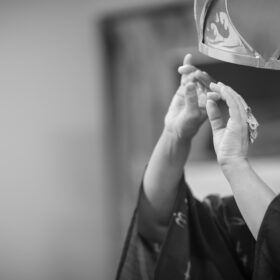
手の表情。
足の表情。
そして顔の表情。
人の身体というのは、
こんなにも多くのことを語るのかと思った。
それは単なる技術ではなく、
人生の積み重ねのように感じられた。
子どもの頃から続けている人も多いと聞いた。
途中でブランクがあったとしても、
その人の人生の中に
ずっと踊りがある。
その時間が、
身体の中に残っているのだと思う。
⸻
琉球王国の時代、
こうした踊りは外交の場でも披露されたという。
もし当時、
外国から来た人がこの踊りを見たら、
きっと感動したのではないだろうか。
美しい所作。
丁寧な振る舞い。
そこには、
この国の人たちの
文化や心が表れている。
武力ではなく、
文化でもてなす。
琉球の芸能には、
そんな力があったのだと思う。
⸻
この稽古の時間には、
そんなものが静かに流れていた。
写真(2026年2月18日)


伝統と文化が守られるステージ。


ため息が出てしまうような見惚れる所作。


何を語り合っているのか。

それは表舞台だけのことでは成り立たない。

人生の積み重ね。
その誇りを感じる表情。

⸻
この記録はシリーズとして続いています。
他の記事はマガジンから読めます。
活動やプロフィールはこちら
https://yoshihiro-hirose.org
⸻
「Soul Journey」は
廣瀬義啓(Yoshihiro Hirose)による
写真ドキュメンタリーシリーズです。
本シリーズは、
写真家による芸術表現であると同時に、
地域文化の記録や文化継承の一助となることを願って制作しています。
掲載している写真および文章の著作権は
すべて撮影者に帰属します。
無断転載・複製・使用はお断りしています。
なお、写真の掲載について
ご都合等の問題がございましたら、
速やかに対応いたしますので、
下記までご連絡いただけますと幸いです。
info@yoshihiro-hirose.org
© Yoshihiro Hirose
ENGLISH
I photographed the rehearsals at Kitanakagusuku Village Central Community Center on two days: February 11 and February 18.
The rehearsal on February 11 started at 7 p.m.
And on February 18, it was held from 9 p.m. to 10 p.m.
People gathered at such late hours,
and the rehearsal for dance and music began.
They must have their work and family lives.
Yet they make time and continue practicing like this.
I feel that culture quietly continues
through the accumulation of such time.
When I arrived at the community center on February 11,
Izumi Higa introduced me as “her student.”
In fact, by that time,
I had already booked two personal sanshin lessons with her.
I thought it was a very Izumi-like way of introducing me —
a little cute and slightly ahead of time.
On the first day of rehearsal,
I wanted to become part of the air.
Rather than stepping forward as a photographer,
I first wanted to feel the atmosphere of the place.
Watching the rehearsal that day,
I felt something very simple.
It looked fun.
And at the same time,
it was very serious.
Behind the dancers,
the jikata quietly supported the music.
Sanshin, kokyu, koto, and drums.
On top of those sounds,
the dance slowly unfolded.
Sometimes there was laughter.
The musicians laughed,
and the dancers from Muyuka no Kai laughed as well.
But when the dance began,
the atmosphere suddenly tightened.
That shift in mood
was very impressive.
During the rehearsal on February 18,
I began to notice something different.
The first thing I felt was
how careful everything was.
Each movement
was slowly checked and confirmed.
And above all,
the eyes of the dancers were impressive.
They were the eyes of people who were absorbed in what they were doing.
Serious eyes.
I pressed the shutter many times,
captivated by the beauty of those expressions.
Ryukyuan dance
moves at a very slow tempo.
Precisely because of that,
nothing can be hidden.
Posture.
Core strength.
Footwork.
Movement of the hands.
From the tips of the toes to the fingertips,
attention reaches everywhere.
Even the smallest movement
contains strong concentration.
And that appearance
is very beautiful.
Perhaps it is partly because the dancers are women.
But it is not only that.
I feel it is a form of bodily expression
that has been refined over a long period of time.
There is one photograph
that left a strong impression on me.
It is a photograph
of Maki Senaha’s feet.
The toes of her tabi socks
were slightly worn.
She laughed and said,
“My tabi are really worn out.”
But to me,
it felt like the mark of time.
It meant she had danced that much.
It meant there was that much accumulated time.
I feel that the beauty of a gesture
is born from time like this.
While editing the photographs,
I was a little surprised.
I found myself moved by my own photographs.
The expression of the hands.
The expression of the feet.
And the expression of the face.
I realized that the human body
can tell so many things.
It felt not simply like technique,
but like the accumulation of a life.
I heard that many of them
have continued dancing since childhood.
Even if there were periods of absence,
dance has always existed
somewhere in their lives.
I think that time
remains within their bodies.
During the era of the Ryukyu Kingdom,
such dances were also performed
in diplomatic settings.
If visitors from foreign lands
had seen these dances at that time,
perhaps they would have been moved.
Beautiful gestures.
Graceful manners.
In those movements,
the culture and spirit of the people of this land appear.
Not through military power,
but through culture.
I believe Ryukyuan performing arts
once had such power.
Something like that
quietly flowed through the time of this rehearsal.
This record continues as a series.
You can read the other articles in the magazine.
Activities and profile:
https://yoshihiro-hirose.org
“Soul Journey” is a photographic documentary series by Yoshihiro Hirose.
This series is created not only as an artistic expression by a photographer,
but also with the hope that it may contribute to the documentation and preservation of regional culture.
All photographs and texts published here are the copyright of the photographer.
Unauthorized reproduction, copying, or use is prohibited.
If there are any concerns regarding the publication of photographs,
please contact us and we will respond promptly.
Contact:
info@yoshihiro-hirose.org
© Yoshihiro Hirose