本文
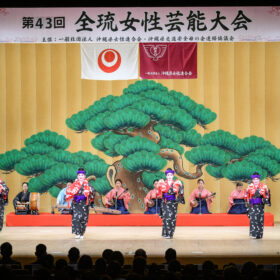
2026年2月28日、国立劇場おきなわで
沖縄県女性連合会主催の
「全琉女性芸能の大会」が開催された。
今回、私が撮影することになったのは
北中城村のチームだ。
きっかけは、
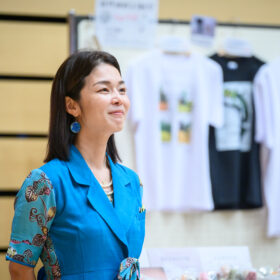
琉球古典音楽野村流保存会師範の
比嘉いづみさんとのご縁だった。
沖縄県那覇にある福州園でライブを聴かせてもらったり、三線を習ったりと
様々な場面でお世話になっているいづみさんから、
琉球舞踊無憂華の会教師 瀬名波牧さんと一緒に
この舞台に出演するという話を聞いた。
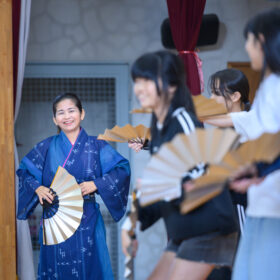
今回の演目では、
歌三線、胡弓、琴、太鼓といった
地謡(じかた)が
北中城村の人たちだけで構成されているという。
それが沖縄では普通のことなのか、
正直なところ、私にはまだよくわからない。
けれど、
一つの村の人たちだけで
地謡が作られているということに、
なんだかとても表現意欲を刺激された。
⸻
沖縄に来てから、
ずっと感じていることがある。
この島では、
伝統音楽や伝統舞踊といった文化が
とても大切に守られているということだ。
それは単なる芸能ではなく、
その土地の歴史や想いと
深く結びついている。
伝統文化や伝統芸能というのは、
長い時間をかけて
その土地で守り継がれてきたものだ。
つまりそれは、
その土地を知るための
大切な入口でもある。
⸻
私は、
世界平和のために写真を撮りたいと思っている。
私が思う世界平和とは、
みんなが同じになることではない。
違いがあること。
そしてその違いを
互いに尊重できること。
そのためには
まず知ることが必要だと思っている。
文化を知ること。
土地を知ること。
そこに生きている人を知ること。
そういうことが、
小さな理解を生み、
やがて大きな平和につながっていくのではないか。
そんなふうに思っている。
⸻
琉球の音楽や舞踊には
興味深い背景がある。
琉球王朝は、
大きな武力を持つ国ではなかった。
だからこそ外交の場では
音楽や舞踊を使って
来訪者をもてなしたと言われている。
芸能が、
平和外交の手段でもあった。
武力ではなく、文化でもてなす。
そういう歴史を持つ文化が
今もこの島で受け継がれている。
そのことに、
私はとても惹かれている。
そして私は、
この文化を記録することも
世界平和につながる写真なのではないかと
思っている。
⸻
もう一つ理由がある。
この撮影をしたいと思った理由だ。
私は、
舞台の本番だけではなく
そこに至るまでの時間を
撮りたいと思った。
舞台の裏には、
必ず長い時間がある。
それは、この舞台のための稽古だけではない。
長い年月の中で、
日々積み重ねられてきた時間だ。
試行錯誤。
努力。
仲間と過ごす時間。
そうした積み重ねがあって
一つの舞台が生まれる。
その時間ごと、
記録してみたいと思った。
⸻
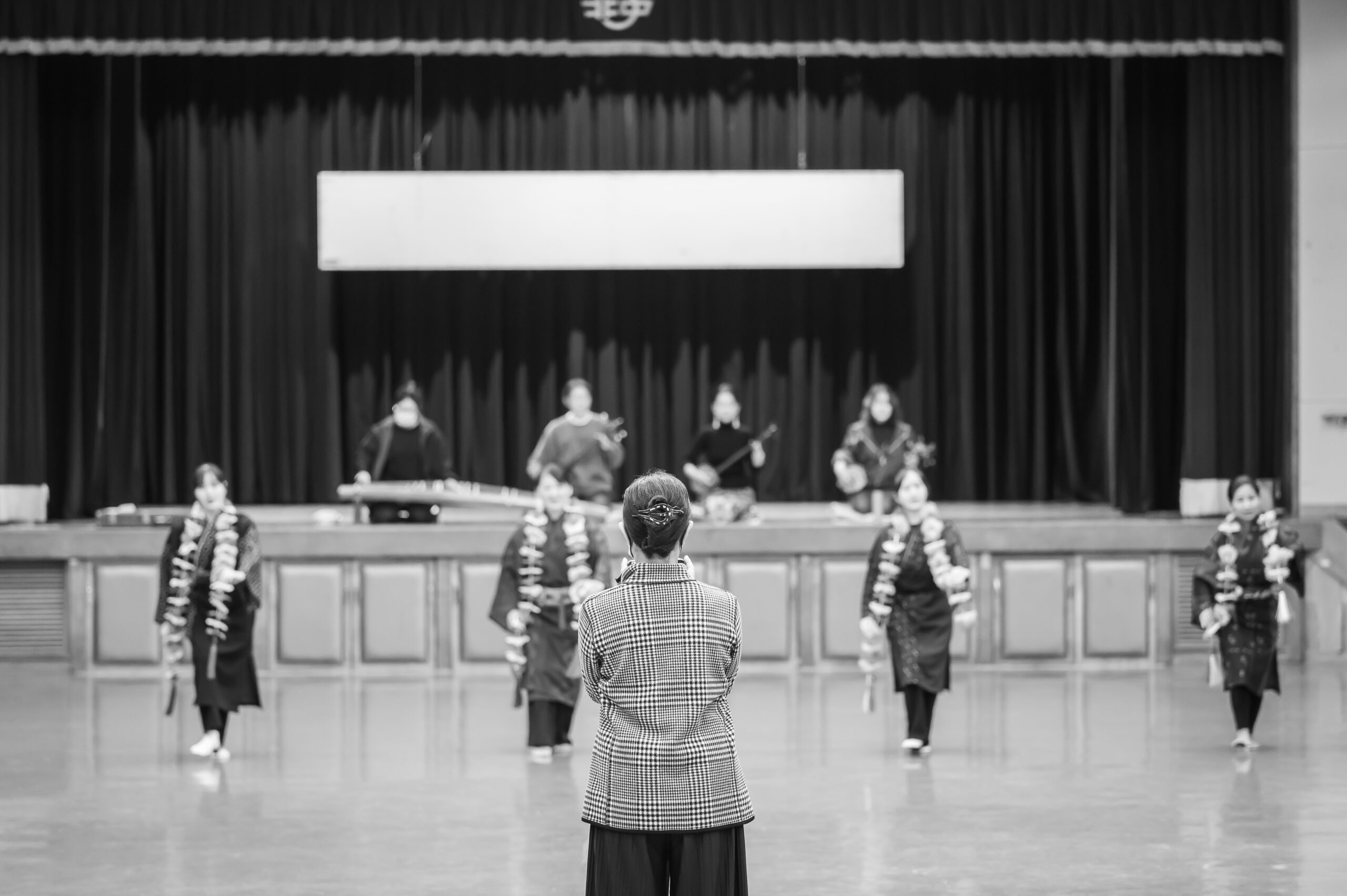
ある日、
その稽古が
北中城村中央公民館で行われると聞いた。
その日は夕方まで用事があったのだが、
終わり次第、北中城へ向かった。
最初は
ただ稽古を見てみたいと思っただけだった。
でも、
その場にいると
やっぱり撮りたくなる。
写真家というのは
そういうものだと思う。
気がつくと
カメラを手にしていた。
⸻
今回のSoul Journeyでは
・稽古の時間
・本番の舞台
その両方を通して、
北中城村チームの姿を
記録していこうと思う。
そこには
琉球の文化を守り続けている人たちの
静かな情熱がある。
そしてその姿はきっと、この土地の文化と魂を伝えてくれるはずだ。
⸻
この記録はシリーズとして続いています。
他の記事はマガジンから読めます。
活動やプロフィールはこちら
https://yoshihiro-hirose.org
⸻
「Soul Journey」は
廣瀬義啓(Yoshihiro Hirose)による
写真ドキュメンタリーシリーズです。
本シリーズは、
写真家による芸術表現であると同時に、
地域文化の記録や文化継承の一助となることを願って制作しています。
掲載している写真および文章の著作権は
すべて撮影者に帰属します。
無断転載・複製・使用はお断りしています。
なお、写真の掲載について
ご都合等の問題がございましたら、
速やかに対応いたしますので、
下記までご連絡いただけますと幸いです。
ENGLISH
On February 28, 2026, the All Ryukyu Women’s Performing Arts Festival, organized by the Okinawa Prefecture Women’s Association, was held at National Theatre Okinawa.
This time, the team I photographed was from Kitanakagusuku Village.
The connection came through Izumi Higa, a master of the Nomura-ryu Preservation Society of Ryukyuan Classical Music.
I have had the chance to listen to her performances at Fukushu-en Garden in Naha, and I have also taken sanshin lessons from her. Through various occasions like these, she has been someone who has supported and guided me.
One day she told me that she would be performing on this stage together with Maki Senaha, a teacher of the Ryukyuan dance group Muyuka no Kai.
In this performance, the musicians — sanshin, kokyu, koto, and drums — forming the jikata (musical ensemble) were all people from Kitanakagusuku Village.
To be honest, I still do not know whether this is something common in Okinawa.
But the idea that the entire musical ensemble was formed only by people from one village somehow stimulated my desire to document it.
Since coming to Okinawa, there is something I have continued to feel.
On this island, cultural traditions such as traditional music and dance are carefully preserved and respected.
They are not simply performing arts.
They are deeply connected to the history and the feelings of the land.
Traditional culture and traditional performing arts are things that have been protected and passed down in a place over a long period of time.
In that sense, they are also an important entrance to understanding the land itself.
I want to take photographs for the sake of world peace.
For me, world peace does not mean that everyone becomes the same.
It means that differences exist, and that we can respect those differences.
And for that, I believe we first need to know.
To know a culture.
To know a place.
To know the people who live there.
Through that kind of understanding, small connections may grow into something larger.
I feel that such understanding may eventually lead to peace.
Ryukyuan music and dance have an interesting historical background.
The Ryukyu Kingdom was not known as a nation with strong military power.
Because of that, it is said that music and dance were used to welcome visitors in diplomatic settings.
Performing arts were also a means of peaceful diplomacy.
Not through military strength,
but through culture.
A culture with such a history is still being passed down on this island today.
That is something that deeply attracts me.
And I feel that documenting this culture through photography may also be a form of photography connected to peace.
There was another reason I wanted to do this project.
I wanted to photograph not only the performance on stage, but also the time that leads up to it.
Behind every stage performance, there is always a long accumulation of time.
It is not only the rehearsals for this particular performance.
It is the time that has been built day by day over many years.
Trial and error.
Effort.
Time spent with companions.
All of these things come together to create a single stage.
I wanted to try to document that time as well.
One day, I heard that a rehearsal would be held at the Kitanakagusuku Village Central Community Center.
I had something to do until the evening that day, but as soon as I finished, I headed to Kitanakagusuku.
At first, I only thought that I wanted to watch the rehearsal.
But once I was there, I naturally felt the urge to photograph.
I think that is simply how photographers are.
Before I realized it, the camera was already in my hands.
In this Soul Journey,
I plan to document the Kitanakagusuku Village team through both
• their rehearsal time
• and the actual stage performance.
Within that process, there is a quiet passion among the people who continue to protect Ryukyuan culture.
And I believe their presence will surely convey the culture and spirit of this land.
This record continues as a series.
You can read the other articles in the magazine.
Activities and profile:
https://yoshihiro-hirose.org
“Soul Journey” is a photographic documentary series by Yoshihiro Hirose.
This series is created not only as an artistic expression by a photographer, but also with the hope that it may contribute, even in a small way, to the documentation and preservation of regional culture.
All photographs and texts published here are the copyright of the photographer. Unauthorized reproduction, copying, or use is strictly prohibited.
If there are any concerns regarding the publication of photographs, please contact us and we will respond promptly.
Contact:
info@yoshihiro-hirose.org