大綱づくりが終わったあと、町には一瞬の余白が生まれる。
それは静けさというより、次に向かうための“間”のような時間だった。
やがてその余白は、少しずつ熱を帯びていく。
午後の行事へと向かって、町全体がゆっくりと動き出していた。
After the rope-making was finished, a brief pause settled over the town.
It wasn’t exactly silence, but rather a kind of space — a moment in between, preparing for what was to come.
Gradually, that pause began to gather heat.
The entire town was slowly shifting, moving toward the events of the afternoon.
本文
大綱づくりが終わると、町は次の行事へと動き出す。
糸満小学校から白銀堂まで、旗頭や踊りの隊列が町を練り歩く。
沖縄ではこの行列を「道ジュネー」と呼ぶ。
それぞれの自治会が、日々の仕事や学校のあとに積み重ねてきた練習や稽古の成果を、この日に披露する。
綱引き本番を前に、町の空気が少しずつ高まっていく時間でもある。
大綱づくりが終わったのは、午前11時半ごろだった。
道ジュネーは午後2時から始まると聞いていたので、少し時間があった。
ここ数日の撮影があまりにも慌ただしく、カメラのバッテリーを充電することさえ忘れていた。
このままでは夜まで持たないと思い、私は充電できる場所を探すことにした。
なんとか充電できる場所を見つけ、しばらくのあいだカメラのバッテリーを充電した。
昼の糸満はかなり暑かった。
日差しが強く、外に出ているだけで体力が削られていくような暑さだった。水を飲みながら、午後の行事に備えることにした。
午後1時を少し過ぎたころ、私は糸満小学校へ向かった。
すでに多くの人が集まっていた。
校庭には旗頭が並び、これから始まる行列の準備が整えられていた。
開始直前まで、空には青空が広がっていた。
ところが旗頭が一斉に立ち上がった直後、突然空の様子が変わり、大粒の雨が降り始めた。
時刻は13時36分。かなり激しい雨だった。
旗頭は雨の中で掲げられていたが、あまりの雨にいったん中断となり、人々は木の下や校舎の中など、それぞれ雨をしのげる場所へと急いで避難していった。
およそ30分ほどして雨は弱まり、道ジュネーは再開された。
行列が動き出したのは14時15分ごろだった。
雨に濡れた道路の上を、隊列はゆっくりと進んでいく。
旗頭は電線と同じくらいの高さまで掲げられる。
重たい旗を掲げながら進むのは、見ているだけでも大変そうだった。
ときどき旗が大きく揺れる。
その瞬間、周りの人たちが一斉に動く。
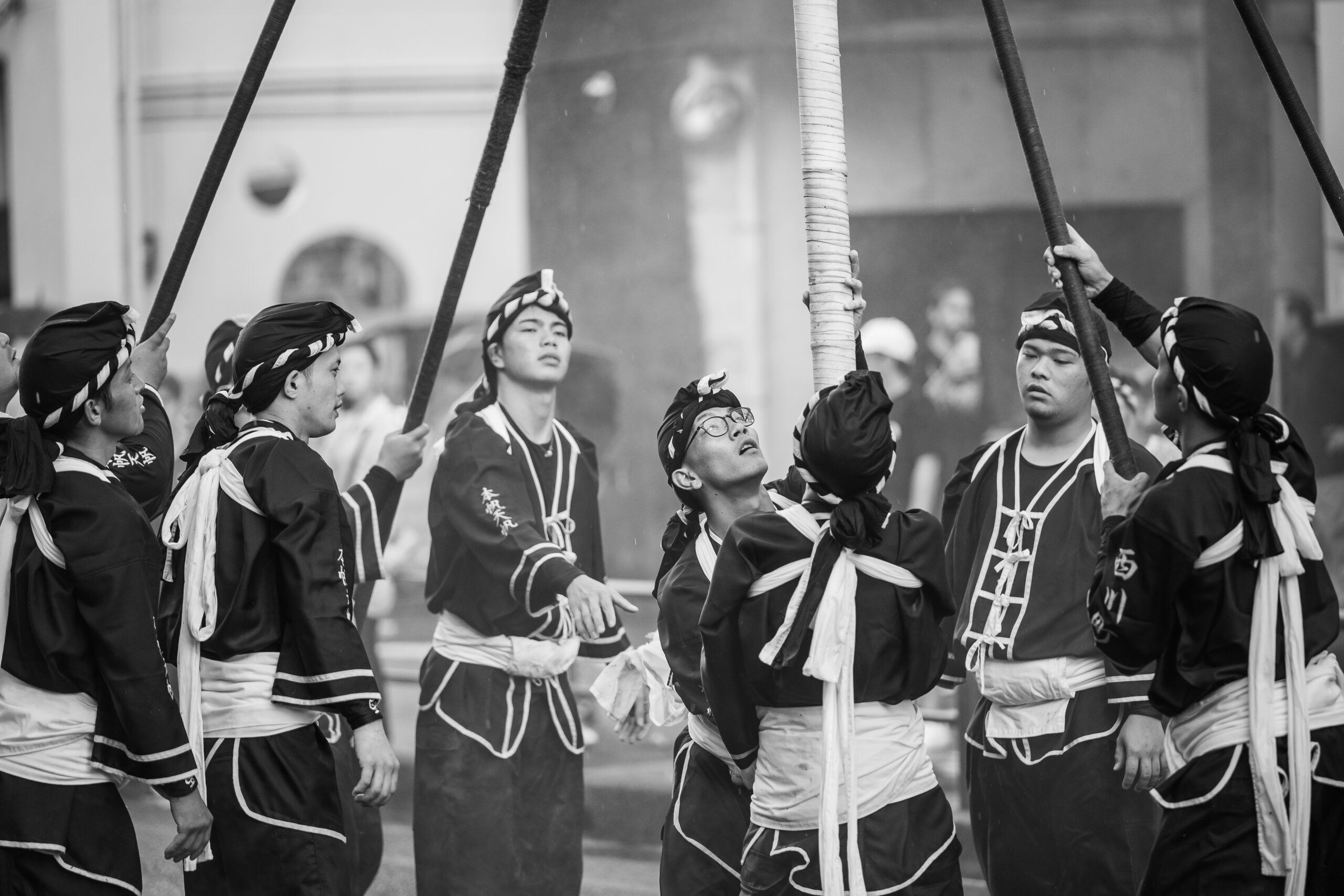
担ぎ手を支える人、旗が電線に触れないように棒で押さえながら支える人たちが、あっという間に集まって旗頭を支えていた。
その場にいる人たちが、誰に言われるでもなく動いている。
仲間同士で助け合う、そんな精神のようなものを感じた。
もしかしたら、これが沖縄でいう
「ゆいまーる(互いに助け合うこと)」
なのかもしれない。
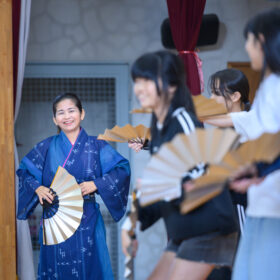
旗頭のほかにも、エイサーや舞踊など、さまざまな隊列が続いていた。子どもから大人まで老若男女が参加しており、それぞれの自治会ごとに、この日のために準備や練習をしてきたのだろう。
学校や仕事が終わったあと、公民館に集まって練習しているのかもしれない。そうして一年に一度、地元で披露する大きな場がこの日なのだと思った。
行列は白銀堂へと進んでいく。
白銀堂に到着すると、実行委員の人たちとともに拝みが行われていた。
そして最後に、旗頭の隊列は綱引きの舞台へと戻っていく。
綱の中心となる場所に旗頭が並び、いよいよ綱引き本番の準備が整っていった。
空を見上げると、さっきまでの雨が嘘のように、また青空が戻っていた。
写真-PHOTOS-

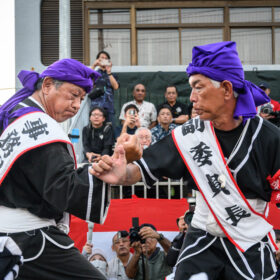
女性チョンダラーが美しい!


実に勇ましい。

感動した!!

実に楽しくかっこいい!

沿道で見ている人たちも笑顔だった。

一糸乱れぬ動きだった。


沿道も観客がたくさん。


私がこれがとても好き。


注記
本作品は、糸満大綱引きという地域文化の記録および文化継承の一助となることを願い、制作しています。
撮影は糸満大綱引き実行委員会関係者のご理解と許可をいただいたうえで行っています。
写真の掲載について、もし不都合や問題等がございましたら、速やかに対応いたしますので、ご連絡いただけますと幸いです。
(info@yoshihiro-hirose.org)
本作品の無断転載・複製はご遠慮ください
ENGLISH
Itoman Great Tug-of-War 2025
— Chapter 6: Michijunē (October 6, 2025, PM)
Once the rope-making was finished, the town began to move toward the next event.
From Itoman Elementary School to Shirogindō, processions of flag bearers and dancers made their way through the streets. In Okinawa, this kind of procession is called Michijunē.
Each community group presented the results of the practices and rehearsals they had built up day by day, after work and school.
It was also a time when the atmosphere of the town gradually intensified, leading up to the main tug-of-war.
The rope-making had finished at around 11:30 in the morning.
I had heard that the Michijunē would begin at 2 p.m., so there was some time in between.
The past few days of shooting had been so hectic that I had even forgotten to charge my camera batteries. Realizing they wouldn’t last through the night, I decided to look for a place where I could recharge them.
After some searching, I managed to find a spot and spent a while charging my batteries.
Midday in Itoman was intensely hot. The sunlight was strong, and just being outside felt like it was draining my energy. I drank water and tried to prepare myself for the afternoon.
A little after 1 p.m., I headed toward Itoman Elementary School.
A large number of people had already gathered. In the schoolyard, the flags were lined up, and preparations for the upcoming procession were underway.
Until just before the start, the sky was clear and blue.
But the moment the flags were raised all at once, the sky suddenly changed, and large drops of rain began to fall. It was 1:36 p.m., and the rain quickly turned heavy.
The flags remained raised in the rain, but it became too intense, and the event was temporarily halted. People hurried to take shelter under trees or inside the school building, each finding a place to escape the downpour.
After about 30 minutes, the rain began to ease, and the Michijunē resumed. The procession started moving again around 2:15 p.m.
The procession slowly advanced along the rain-soaked road.
The flags were lifted to a height nearly equal to the overhead power lines. Watching the bearers carry such heavy flags while moving forward looked incredibly demanding.
At times, the flags swayed dramatically.
In those moments, people around them moved all at once. Some supported the carriers, while others used long poles to keep the flags from touching the power lines. In an instant, people gathered to stabilize the towering flags.
No one needed to be told what to do.
Everyone simply moved.
I felt something there — a spirit of helping one another.
Perhaps this is what is called “Yuimāru” in Okinawa — the act of supporting each other.
Alongside the flags, there were also processions of Eisa dancers and traditional performers. People of all ages, from children to elders, took part. Each community must have prepared and practiced for this day.
Maybe they gathered at community halls after school or work to rehearse. And once a year, this day becomes a stage where they present what they have built together.
The procession continued toward Shirogindō.
Upon arrival, prayers were offered together with the event organizers.
Finally, the procession of flags returned to the site of the tug-of-war. The flags were lined up at the center point of the rope, and preparations for the main event were complete.
When I looked up at the sky, the rain from earlier felt like a lie — the blue sky had returned once again.
—
Other articles in this series can be found in the magazine.
For activities and profile:
https://yoshihiro-hirose.org
—
All photographs and texts published here are copyrighted by the photographer.
Unauthorized reproduction, duplication, or use is strictly prohibited.
If there are any concerns regarding the publication of photographs, please feel free to contact me and I will respond promptly.
info@yoshihiro-hirose.org