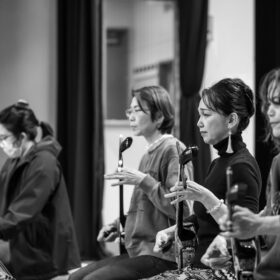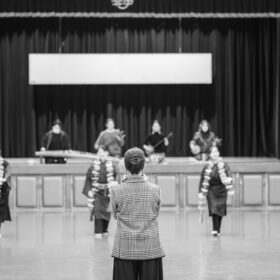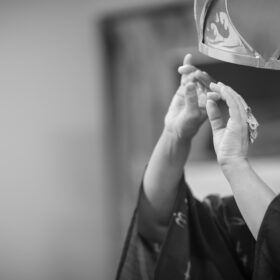
ある一つの行事を目にしたとき、
私たちはつい、その「完成された姿」だけを見てしまう。
けれど、その背後には、
目に見えない時間と、人の手の積み重ねがある。
糸満大綱引きもまた、
その一日だけで成り立っているものではなかった。
大綱が町に現れるまでのあいだに、
どれだけの人が関わり、どれだけの手が動いているのか。
その始まりを、私は見に行った。
本文
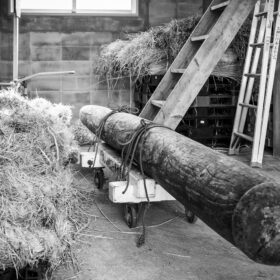
糸満大綱引きで使われる大綱は、いきなり一本の巨大な綱として作られるわけではない。
まずは小さな綱を数多く作るところから始まる。
それらを寄り合わせ、さらに寄り合わせることで、やがて巨大な大綱へと姿を変えていく。
この小綱づくりは、実行委員会の人たちとともに、地域の各公民館で行われている。
それぞれの地域で決められた本数の綱を作り、後にそれらを集めていくのだという。
私は実行委員会の方々に同行させていただき、
いくつかの公民館を回りながら、その綱づくりの様子を撮影させてもらった。
作業はいくつかの役割に分かれていた。
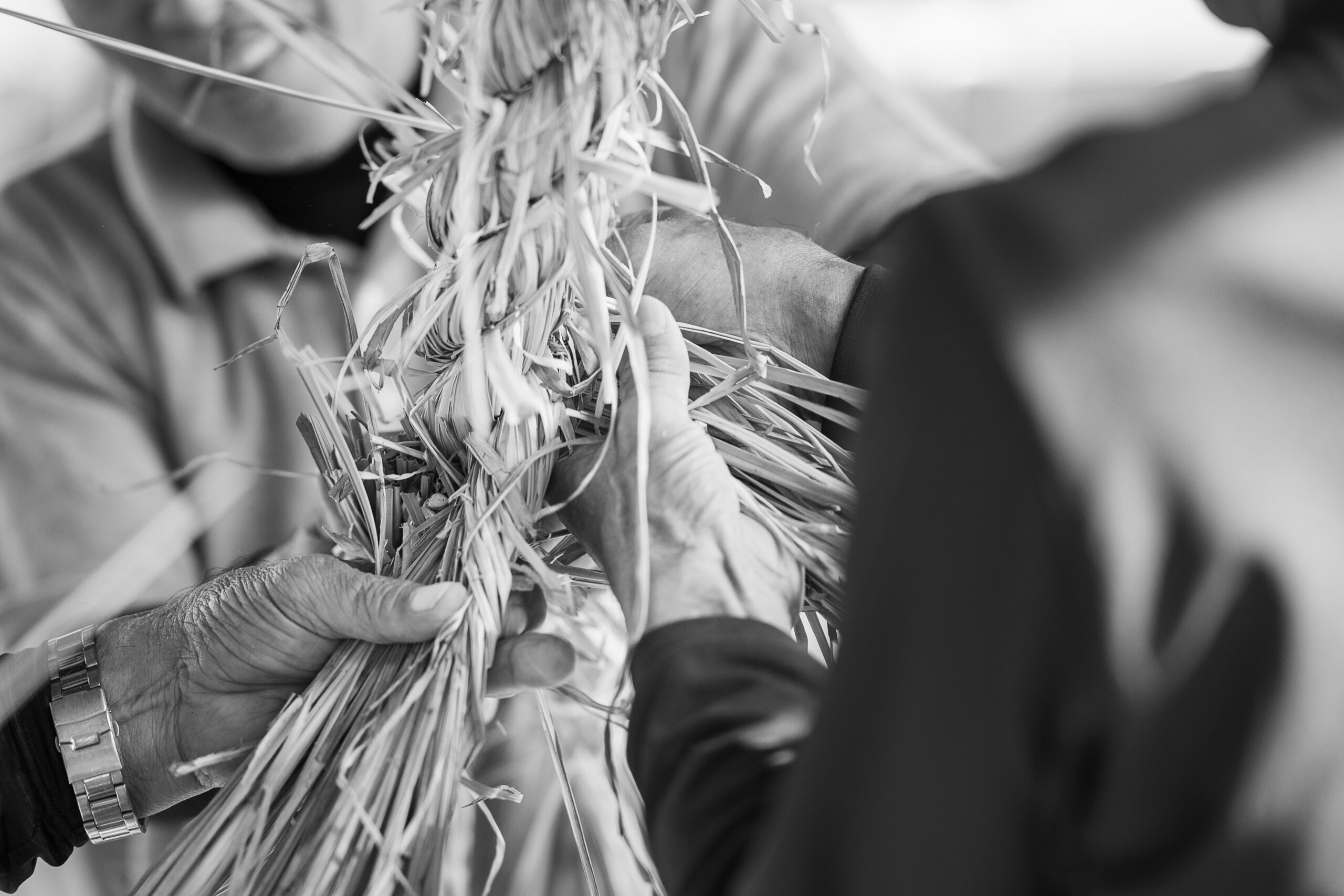
まず、わらを揃えたり束ねたりして材料を整える人たちがいる。
その材料を使って縄をねじっていく人たちがいる。
三人ほどが向かい合うように立ち、
それぞれが細い縄をねじっていく。
そして自分のねじった縄を、
力を込めてねじりながら隣の人へ渡す。
渡された縄はさらにねじられ、
また次の人へと渡されていく。
その動きを繰り返すことで、
三本の縄が一本の綱へと寄り合わされていく。
寄り合わされた綱は、
今度はそれを引っ張りながら長く伸ばしていく人たちの手へ渡る。
力を合わせ、息を合わせながら
「えい、えい」と声を出して寄っていく。
ゆるく寄ると、綱はすぐにばらけてしまう。
しっかりと力を込めて締めていかなければならない。
作業のそばでは、
実行委員会の人や地域の先輩たちが若い人たちに声をかけていた。
「もっと強く締めて」
「そこはしっかり寄らないとだめだよ」
そんな言葉が飛ぶ。
長くこの行事に関わってきた人たちが、
綱の寄り方や作り方を作業の中で伝えていく。
縄のねじり方。
力の入れ方。
締めるタイミング。
そうした感覚が、
少しずつ次の世代へと受け継がれていく。
こうして文化や伝統は、
人から人へと伝わっていくのだろうと思った。
参加している人たちもさまざまだった。
若い男性が力仕事を担い、
子どもたちもできることを手伝っている。
そして年配の女性たちは、
炊き出しをしたり飲み物を用意したりと、
別の形でこの作業を支えていた。
老若男女が、それぞれの役割で関わっている。
9月の終わりとはいえ、沖縄の日差しはまだ強い。
皆、汗をかきながら黙々と手を動かしていた。
その光景を見ながら、私は少し考えていた。
ここで作業をしている人たちのすべてが、
この行事の歴史や意味を詳しく知っているわけではないのかもしれない。
それでも人々はこうして集まり、
綱を作り続けている。
受け継がれてきた行事というものは、
こうした日々の積み重ねの中で続いていくのだろうと思った。
糸満だけでなく、沖縄では外から移り住んできた人たちも多く暮らしている。
かくいう私も、東京から沖縄に移り住んできた一人だ。
土地には、その土地の文化や風習がある。
それが自分の生まれ育った場所の文化とは違っていたとしても、
まずは知り、触れてみることから始まるのではないかと思う。
この綱づくりの場でも、
地域の人だけでなく、移り住んできた人や外国から来た人たちの姿も見られた。
そうした人たちが、この行事に関わりながら
この土地の文化に触れていく。
互いを尊重しながら共に暮らしていくこと。
それはとても当たり前のことのようでいて、
実はとても大切なことなのだと思う。
人の手で寄られていく縄は、
やがて大綱となり、糸満の町を結び合わせていく。
そしてその綱は、
人と人もまた結び合わせているように見えた。
写真


受け持つ本数が変わってくる。


⸻
この記録はシリーズとして続いています。
他の記事はマガジンから読めます。
活動やプロフィールはこちら
https://yoshihiro-hirose.org
⸻
注記
本作品は、糸満大綱引きという地域文化の記録および文化継承の一助となることを願い、制作しています。
撮影は糸満大綱引き実行委員会関係者のご理解と許可をいただいたうえで行っています。
写真の掲載について、もし不都合や問題等がございましたら、速やかに対応いたしますので、ご連絡いただけますと幸いです。
(info@yoshihiro-hirose.org)
本作品の無断転載・複製はご遠慮ください
ENGLISH
Itoman Otsunahiki 2025 — Episode 3
Making the Small Ropes (September 28, 2025)
—
The giant rope used in the Itoman Otsunahiki is not made all at once.
It begins with the making of many small ropes.
These ropes are twisted together, and then twisted together again,
until eventually they become the massive rope used in the festival.
—
The making of these small ropes takes place in community centers throughout the town, together with members of the executive committee.
Each district is responsible for producing a certain number of ropes.
Later, those ropes are gathered and combined.
I accompanied members of the executive committee as they visited several community centers, photographing the process of rope making.
—
The work was divided into several roles.
First, some people prepared the materials by sorting and bundling the straw.
Others twisted the straw into rope.
About three people stood facing each other, each twisting a thin rope.
As they twisted, they passed the rope to the next person beside them.
The rope that was passed along was twisted again and then passed to the next person.
By repeating this movement, three ropes gradually became one.
Once combined, the rope was handed to another group who stretched it out to length.
Working together and matching their rhythm, they called out,
“Ei! Ei!”
If the twisting was too loose, the rope would quickly fall apart.
It had to be tightened firmly with strength.
—
Near the work, members of the executive committee and older residents gave advice to younger participants.
“Tighten it more.”
“You have to twist it firmly there.”
Words like these were exchanged.
People who had been involved in the festival for many years passed down their knowledge through the work itself.
How to twist the rope.
How to apply strength.
When to tighten.
These skills and sensations were gradually passed on to the next generation.
Watching this, I felt that this is how culture and tradition are handed down—from person to person.
—
The people participating were also diverse.
Young men took on much of the physical work.
Children helped with what they could.
Older women supported the work in other ways, preparing food and drinks.
Men and women of all ages were involved, each playing their role.
Even though it was already late September, the Okinawan sun was still strong.
Everyone worked silently, sweating as they moved their hands.
—
Watching the scene, I found myself thinking about something.
Not everyone working there necessarily knew the full history or meaning of the festival.
And yet people gathered and continued making the ropes.
Perhaps traditions continue precisely through these quiet, repeated acts.
—
Not only in Itoman, but throughout Okinawa many people have moved here from elsewhere.
I myself am one of them, having moved to Okinawa from Tokyo.
Every place has its own culture and customs.
Even if they are different from the culture where one was born and raised,
perhaps the first step is simply to learn about them and experience them.
—
At this rope-making site, I saw not only local residents but also people who had moved to the area and even visitors from overseas.
Through participating in this event, they were encountering the culture of this land.
Living together while respecting one another.
It sounds simple, but it is something deeply important.
—
The ropes twisted by human hands would eventually become the great rope that connects the town of Itoman.
And as I watched,
it seemed that the rope was also connecting people to one another.
—
This record continues as a series.
Other chapters can be read in the magazine.
Activity and profile:
https://yoshihiro-hirose.org
—
Note
This work has been created with the hope that it may serve as a record of the cultural tradition of the Itoman Otsunahiki, and contribute in some small way to its cultural preservation.
All photographs were taken with the understanding and permission of members of the Itoman Otsunahiki Executive Committee.
If there are any concerns regarding the publication of photographs, please feel free to contact me and I will respond promptly.
info@yoshihiro-hirose.org
Unauthorized reproduction or redistribution of this work is prohibited.