祭りの日、巨大な綱が町の中央に据えられると、
南と北の綱は一本に結び合わされる。
その中心を支えるのが、
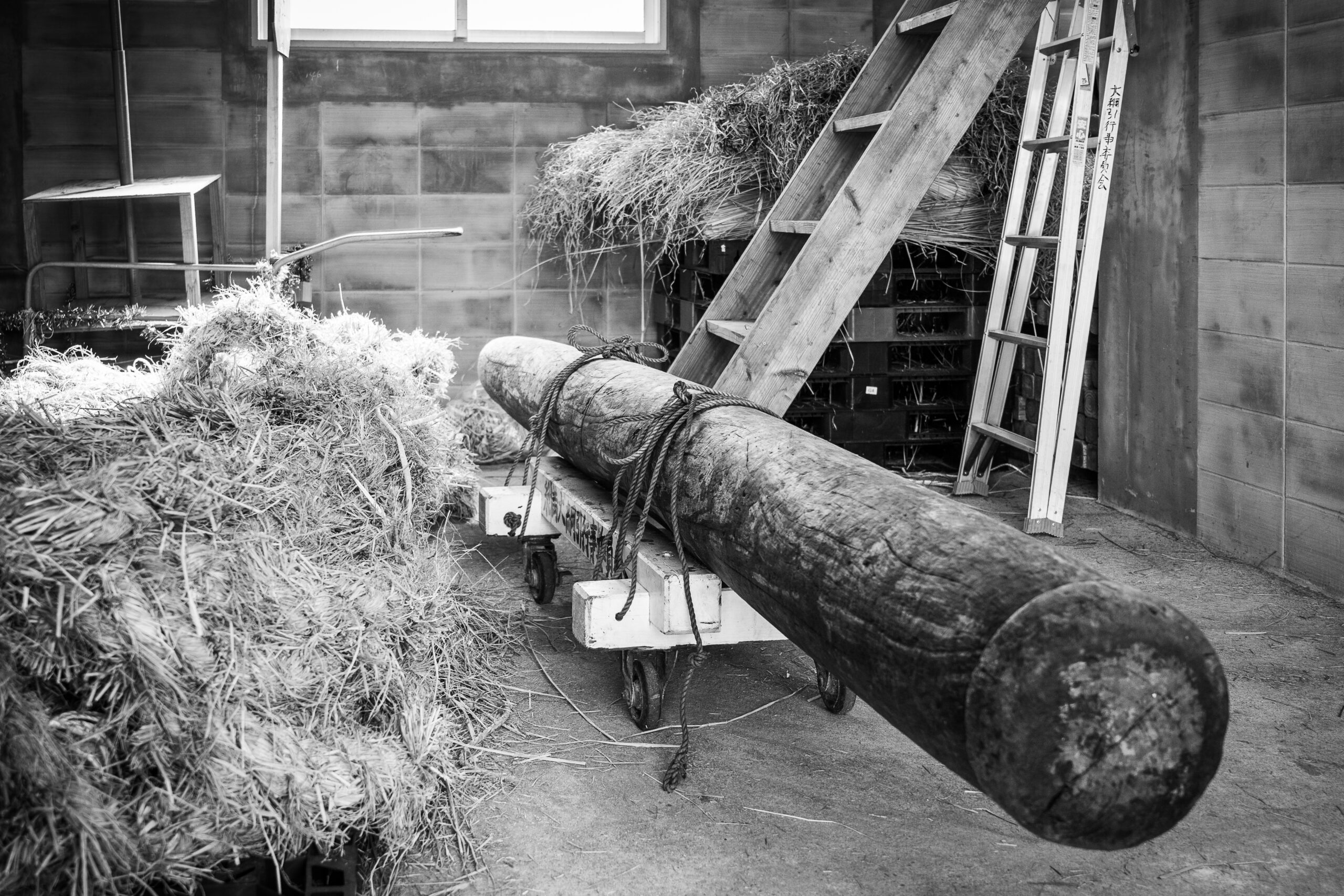
カヌチ棒と呼ばれる一本の棒だ。
普段は人目に触れることのないその棒も、
祭りの重要な役割を担っている。
そのカヌチ棒を、川の中から引き上げる日がある。
本文
糸満大綱引きでは、南北それぞれの綱を中央で結び合わせる構造になっている。
二本の綱は「雄綱」と「雌綱」と呼ばれ、雌綱の先端には大きな輪が作られる。
その輪の中に雄綱を通し、綱が抜けないように固定するために差し込まれるのが、カヌチ棒である。
この棒は、大綱引きの中心を支える重要な役割を持っている。
祭りの当日、このカヌチ棒が雄綱と雌綱を結び合わせることで、巨大な綱は一つになる。
2025年9月23日。
この日は、そのカヌチ棒を川から引き上げる日だった。
集合は朝8時と聞いていた。
私は少し早めに現地へ向かった。
7時半ごろ、指定された場所に到着した。
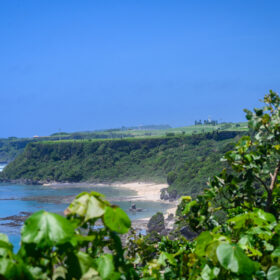
場所は嘉手志川(カデシガー)。
「恵泉の龍」とも呼ばれる湧き水の泉で、透き通った水が絶えず湧き出している場所だ。
水は驚くほど透明で、9月とはいえ触れると冷たい。
地元の子どもたちの遊び場にもなっているような場所だった。
そこに着くと、すでに一人で作業をしている人がいた。
糸満大綱引き実行委員会の上原義隆さんだった。
水の中に沈めて保管されていたカヌチ棒を固定している場所から外し、
浅瀬の方へと移動させていた。
この棒は、七月ごろから川の中に沈めて保管されているという。
水を含ませることで木が重くなり、強度も増すのだそうだ。
二ヶ月の間に、その重さは大きく変わるらしい。
上原さんは一人で水の中に入り、
棒についた苔や汚れを落としていた。
静かな朝の作業だった。
その姿を見ながら、
慕われる人というのは、こういう人なのだろうと思った。
やがて8時が近づくと、他の人たちも集まってきた。
そして皆で水の中に入り、カヌチ棒を磨く作業が始まった。
水に足を入れると、その冷たさに顔をしかめる人もいた。
それでも誰もが黙々と手を動かしていた。
棒がきれいになると、いよいよ引き上げの作業が始まる。
水を吸ったカヌチ棒は非常に重い。
人の手で持ち上げ、まず台車のようなものに乗せる。
そこからクレーンで吊り上げ、トラックに積み込む。
そして保管庫へと運ばれ、再び大切に保管される。
その作業は、想像していた以上に大変そうだった。
それでも人々は朝早くから集まり、
力を合わせてこの棒を引き上げていた。
ただ一本の棒を引き上げる作業。
言ってしまえば、それだけのことかもしれない。
けれど、そのために時間をつくり、
集まり、力を合わせて作業をしている。
その姿を見ながら、
この祭りは人の思いによって支えられているのだと感じていた。
皆の表情は真剣で、
どこか誇らしさのようなものも感じられた。
水の中で作業をするその姿は、
とても美しく、そして格好よく見えた。
写真


(イタズラが多いらしい。。。)


冷たい水が気持ちよさそう。

注記
本作品は、糸満大綱引きという地域文化の記録および文化継承の一助となることを願い、制作しています。
撮影は糸満大綱引き実行委員会関係者のご理解と許可をいただいたうえで行っています。
写真の掲載について、もし不都合や問題等がございましたら、速やかに対応いたしますので、ご連絡いただけますと幸いです。
(info@yoshihiro-hirose.org)
本作品の無断転載・複製はご遠慮ください
ENGLISH
Itoman Otsunahiki 2025 — Episode 2
Lifting the Kanuchi-bō (September 23, 2025)
—
On the day of the festival, when the enormous rope is placed in the center of the town,
the ropes of the north and south are joined together as one.
At the center of that connection is a single wooden pole called the Kanuchi-bō.
Normally, it is never seen by the public.
Yet it plays an essential role in the festival.
There is a day when that pole is lifted from the river where it has been kept.
—
In the Itoman Otsunahiki, the ropes from the north and south are connected in the center.
The two ropes are called the male rope and the female rope.
At the end of the female rope, a large loop is formed.
The male rope is passed through that loop, and the Kanuchi-bō is inserted to secure them together so the ropes cannot come apart.
This single pole supports the very center of the tug-of-war.
On the day of the festival, when the Kanuchi-bō joins the male and female ropes together,
the massive rope finally becomes one.
—
September 23, 2025.
This was the day the Kanuchi-bō would be lifted from the river.
I had been told the gathering would be at eight in the morning,
so I decided to arrive a little earlier.
Around 7:30, I reached the designated place.
The location was Kadeshigā River, a spring also known as The Dragon of Sacred Water.
Clear water constantly flows there from underground.
The water was astonishingly transparent, and even in September it felt cold when touched.
It seemed to be a place where local children sometimes played.
When I arrived, someone was already working alone.
It was Yoshitaka Uehara from the Itoman Otsunahiki Executive Committee.
He was removing the Kanuchi-bō from the place where it had been secured underwater and moving it toward the shallows.
—
The pole is kept submerged in the river from around July.
By absorbing water, the wood becomes heavier and stronger.
Over the course of two months, its weight changes significantly.
Uehara entered the water alone and carefully removed moss and dirt from the pole.
It was quiet work in the early morning.
Watching him, I thought that perhaps this is the kind of person people naturally respect.
—
As eight o’clock approached, more people began to arrive.
Together they entered the water and began cleaning the Kanuchi-bō.
When people stepped into the water, some grimaced at the cold.
Still, everyone worked quietly with their hands.
Once the pole was clean, it was finally time to lift it.
The Kanuchi-bō, soaked with water, was extremely heavy.
First it was lifted by hand and placed onto a small cart.
From there, a crane hoisted it into the air and loaded it onto a truck.
It would then be transported to a storage facility and carefully kept until the festival.
The work looked far more difficult than I had imagined.
—
Even so, people had gathered early in the morning.
Working together, they lifted this single pole from the water.
Just one pole.
In a sense, that is all it was.
Yet people had made time in their day, gathered together, and worked side by side to raise it.
Watching them, I felt that this festival is supported by the dedication of people.
Their expressions were serious.
There was also something like quiet pride.
Standing in the water, working together,
their 모습 looked both beautiful and strong.
—
Note
This work has been created with the hope that it may serve as a record of the cultural tradition of the Itoman Otsunahiki, and contribute in some small way to its cultural preservation.
All photographs were taken with the understanding and permission of members of the Itoman Otsunahiki Executive Committee.
If there are any concerns regarding the publication of photographs, please feel free to contact me and I will respond promptly.
info@yoshihiro-hirose.org
Unauthorized reproduction or redistribution of this work is prohibited.