祭りの賑わいの裏側には、
その日を迎えるまでの準備の時間がある。
糸満大綱引きもまた、
祭り当日だけで成り立っている行事ではない。
地域の人々が集まり、手を動かし、
少しずつ形を作り上げていく時間がある。
巨大な綱が町の中央に据えられ、
人々がその綱を引き合うとき、
この行事のクライマックスが訪れる。
けれど、その光景の前には、
まだ綱の形もないところから始まる
静かな準備の時間がある。
本文
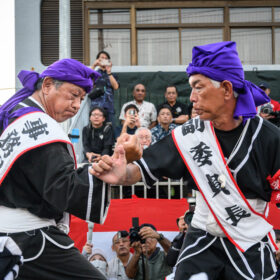
糸満大綱引きは、沖縄県糸満市で旧暦八月十五日の十五夜に行われる伝統行事である。
五穀豊穣や大漁、家内安全を祈り、南北に分かれた人々が巨大な綱を引き合う神事として、古くからこの地で受け継がれてきた。
糸満は、古くから海人(ウミンチュ)の町として知られている。
その土地で行われるこの大綱引きもまた、大漁や豊作といった実りを祈る行事として続いてきた。
沖縄では各地に大綱引きの文化がある。
中でも那覇大綱挽は、その巨大な綱と規模の大きさで知られ、世界最大の綱としてギネス記録にも認定されている。
多くの観光客が訪れ、沖縄を代表する祭りのひとつでもある。
一方で、糸満大綱引きには少し違った空気がある。
それは、地元の人たちの手によって作られ、地元の人たちによって続いてきた祭りであるということだ。
この祭りで使われる綱は、既製のものではない。
地域の人々の手によって、毎年ゼロから作られる。
各区で作られた小綱を寄り合わせ、最終的には長さおよそ180メートル、重さ約10トンにもなる巨大な綱が完成する。
地域の人々が守り続けてきたこの行事は、今も途切れることなく受け継がれている。
もちろん、外から訪れる人がこの祭りを見ることも、とても大切なことだと思う。
地域の行事だからこそ、その土地の文化や空気を感じるために、人が訪れる。
そんな祭りでもあるのだと思う。
祭り当日、朝から大綱を作る光景は、この行事の大きな特徴でもある。
しかし、その準備はもっと前から始まっている。
2025年は、9月21日。
この日から大綱引きの準備が始まった。
とりわけ、実行委員の方々や企画に携わる人たちの準備は、それよりもずっと前から行われていたのだと思う。
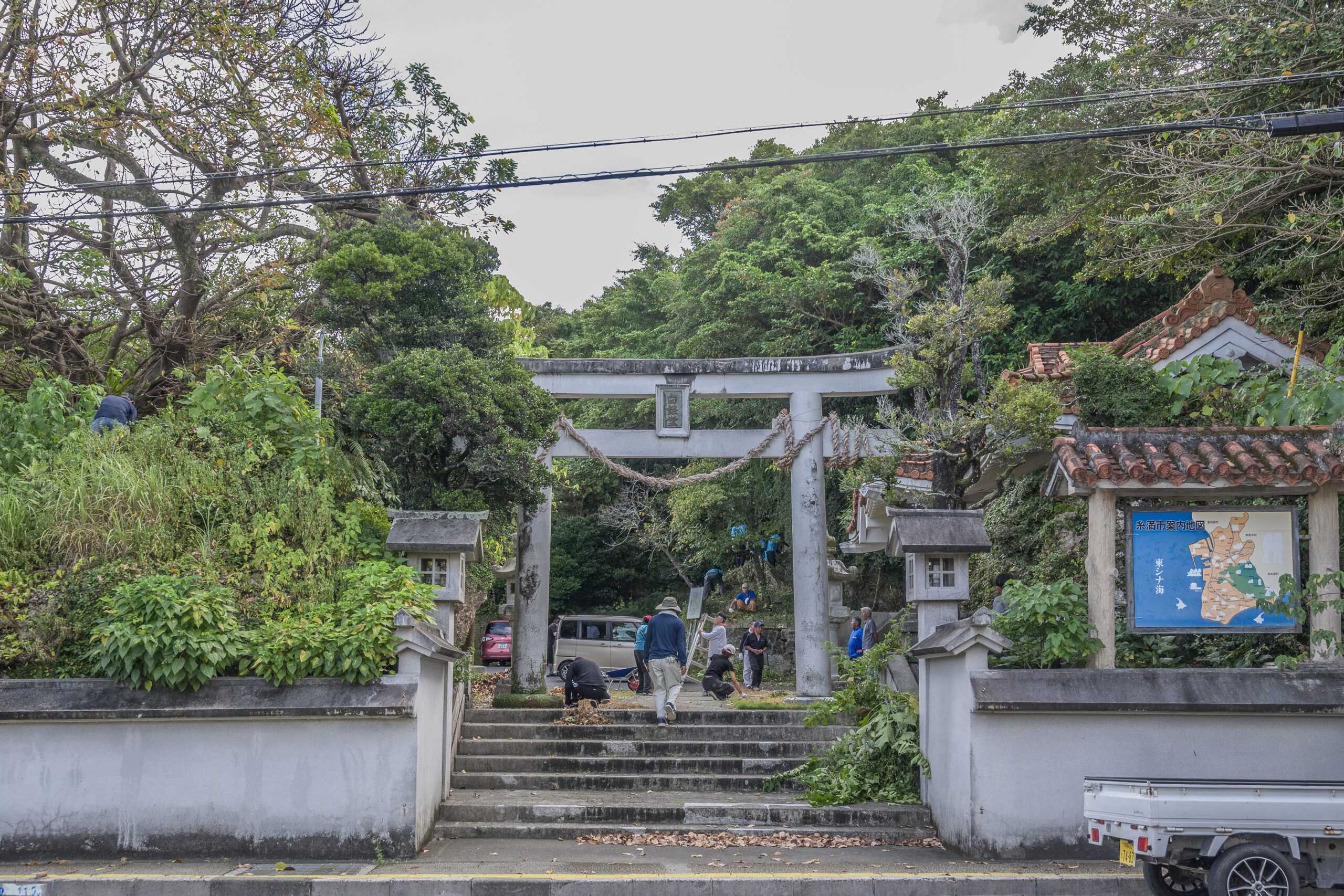
私が最初に立ち会ったこの日の作業は、白銀堂の掃除と、綱づくりの材料の準備だった。
朝になると、地域の人たちが次々と集まってきた。
高校生くらいの若者から年配の方まで、老若男女、本当にさまざまな人たちが境内に集まっていた。
屋根の上に生えた草を刈る人。
伸びた木の枝を高所作業車を使って切り落とす人。
境内では、草を刈り、絡まった蔓を切っていく人たちもいた。
それぞれが黙々と手を動かし、祭りを迎える場所を整えていく。
9月の沖縄は、まだ夏のような暑さだ。
それでも三十人、いや四十人ほどだっただろうか。
これだけの人たちが自然と集まり、地域の行事のために体を動かしている姿に、私は少し驚いていた。
もう一つの作業が、綱づくりの材料となるペチパーの準備だった。
例年は、この工程はほとんど必要ないという。
輸入された稲わらがまとまった形で届くためだ。
しかし今年は、中国からの藁の輸入ができなかった。
そのため沖縄県内の各地から集められたペチパーを、一つひとつ長さを揃え、束ねていく作業が必要になった。
例年、大綱づくりにはおよそ10トンもの藁が使われる。
しかし今年準備された量は、そのおよそ三分の一ほどだった。
作業は、材料を保管している倉庫のような場所で行われていた。
ペチパーは、沖縄で畑の周囲などに植えられているイネ科の植物で、
深く根を張るため赤土の流出を防ぐ役割も持っている。
刈り取った葉は敷き草や縄などにも使われ、
昔からさまざまな形で暮らしの中に利用されてきた。
その細く裂かれた繊維を、
綱づくりの材料として束ねていく。
乾いた繊維の細かな屑が空気中に舞い、
マスクをしていないと吸い込んでしまいそうなほどだった。
まだ綱の形にもなっていない、ただの繊維の束。
その段階から、人々は祭りのために手を動かしている。
その光景を見ながら、
この大綱引きは祭りの日だけのものではないのだと感じていた。
人の手によって、時間をかけて、
少しずつ作られていく行事なのだ。
まだ綱の形はどこにもない。
けれど、この日から確かに、糸満大綱引きは始まっていた。
私は、その始まりの時間を記録したいと思った。
写真


(これはおそらくペチパー)
注記
本作品は、糸満大綱引きという地域文化の記録および文化継承の一助となることを願い、制作しています。
撮影は糸満大綱引き実行委員会関係者のご理解と許可をいただいたうえで行っています。
写真の掲載について、もし不都合や問題等がございましたら、速やかに対応いたしますので、ご連絡いただけますと幸いです。
(info@yoshihiro-hirose.org)
本作品の無断転載・複製はご遠慮ください
ENGLISH
Itoman Otsunahiki 2025 — Episode 1
The Beginning of Preparation (September 21, 2025)
—
Behind the excitement of a festival,
there is always time spent preparing for that day.
The Itoman Otsunahiki is no exception.
It is not an event that exists only on the day of the festival itself.
People from the community gather.
They move their hands.
Little by little, they shape what will become the festival.
When the enormous rope is finally placed in the center of the town
and people pull against each other from the north and south,
the climax of the event arrives.
But before that moment,
there is a quiet period of preparation—
a time when the rope does not yet even exist.
—
The Itoman Otsunahiki is a traditional event held in Itoman City, Okinawa, on the night of the full moon during the lunar Mid-Autumn Festival.
It is a ritual in which people divide into northern and southern teams and pull a giant rope, praying for a good harvest, abundant fishing, and the safety of their families.
It has been passed down in this place for generations.
Itoman has long been known as a town of Uminchu, the people of the sea.
The great tug-of-war held here is also rooted in prayers for abundant catches and prosperous harvests.
Across Okinawa, there are many traditions of giant tug-of-war festivals.
Among them, the Naha Otsunahiki is widely known for its enormous scale.
Its massive rope has even been recognized by Guinness World Records as the largest rope in the world, and the festival attracts many visitors as one of Okinawa’s most famous events.
The Itoman Otsunahiki, however, has a slightly different atmosphere.
It is a festival created by the hands of local people,
and continued by those same people.
The rope used in this festival is not something manufactured beforehand.
Each year, it is made from scratch by members of the community.
Smaller ropes created in each district are gathered together, and eventually they become a massive rope nearly 180 meters long and weighing around 10 tons.
This event, preserved and protected by the people of the region, continues today without interruption.
Of course, it is also meaningful that people from outside the town come to witness the festival.
Because it is a local event, visitors can feel the culture and atmosphere of the place through it.
In that sense, the festival welcomes both the community and those who come to see it.
—
On the day of the festival, the giant rope is assembled from the morning.
This is one of the most distinctive sights of the event.
But the preparations begin long before that.
In 2025, preparation began on September 21.
The work carried out by members of the executive committee and others involved in organizing the event had likely started much earlier.
The first work I witnessed on that day was the cleaning of Shirogindō, the sacred site where the tug-of-war takes place, and the preparation of materials used to make the rope.
As morning arrived, people from the community began to gather one after another.
There were high school students and elderly residents.
Men and women of all ages gathered within the grounds.
Some climbed onto rooftops to cut the grass growing there.
Others used high-lift work platforms to trim the branches of overgrown trees.
Within the grounds, people cut grass and removed tangled vines.
Everyone worked quietly with their hands, preparing the place where the festival would be held.
September in Okinawa is still as hot as midsummer.
Yet thirty—perhaps even forty—people had gathered.
Seeing so many people naturally come together and move their bodies for the sake of a local event surprised me.
—
Another task that day was preparing pechipa, the material used to make the ropes.
Normally this step is almost unnecessary.
Imported rice straw usually arrives already bundled.
But that year, straw imports from China were not possible.
As a result, pechipa collected from different parts of Okinawa had to be sorted, cut to equal length, and bundled by hand.
Typically, about ten tons of straw are used to make the giant rope.
But that year, only about one third of that amount had been prepared.
The work took place inside a storage building where the materials were kept.
Pechipa is a type of grass commonly planted around fields in Okinawa.
Because its roots grow deeply, it helps prevent the erosion of Okinawa’s red soil.
The harvested leaves have long been used in everyday life—for ground covering, rope making, and other purposes.
The fibers were split into thin strands and bundled together as materials for rope making.
Tiny dry fragments of fiber floated through the air.
Without a mask, it felt as though you might inhale them.
At that stage, it was still only bundles of fibers.
The rope did not yet exist.
And yet people were already moving their hands for the sake of the festival.
Watching that scene, I felt something clearly.
This tug-of-war is not something that exists only on the day of the festival.
It is an event built slowly over time, through the hands of many people.
There was still no rope.
But from that day onward,
the Itoman Otsunahiki had already begun.
And I wanted to document the moment when it started.
—
Note
This work has been created with the hope that it may serve as a record of the cultural tradition of the Itoman Otsunahiki, and contribute in some small way to its cultural preservation.
All photographs were taken with the understanding and permission of members of the Itoman Otsunahiki Executive Committee.
If there are any concerns regarding the publication of photographs, please feel free to contact me and I will respond promptly.
info@yoshihiro-hirose.org
Unauthorized reproduction or redistribution of this work is prohibited.