『命』と共に在るさらし
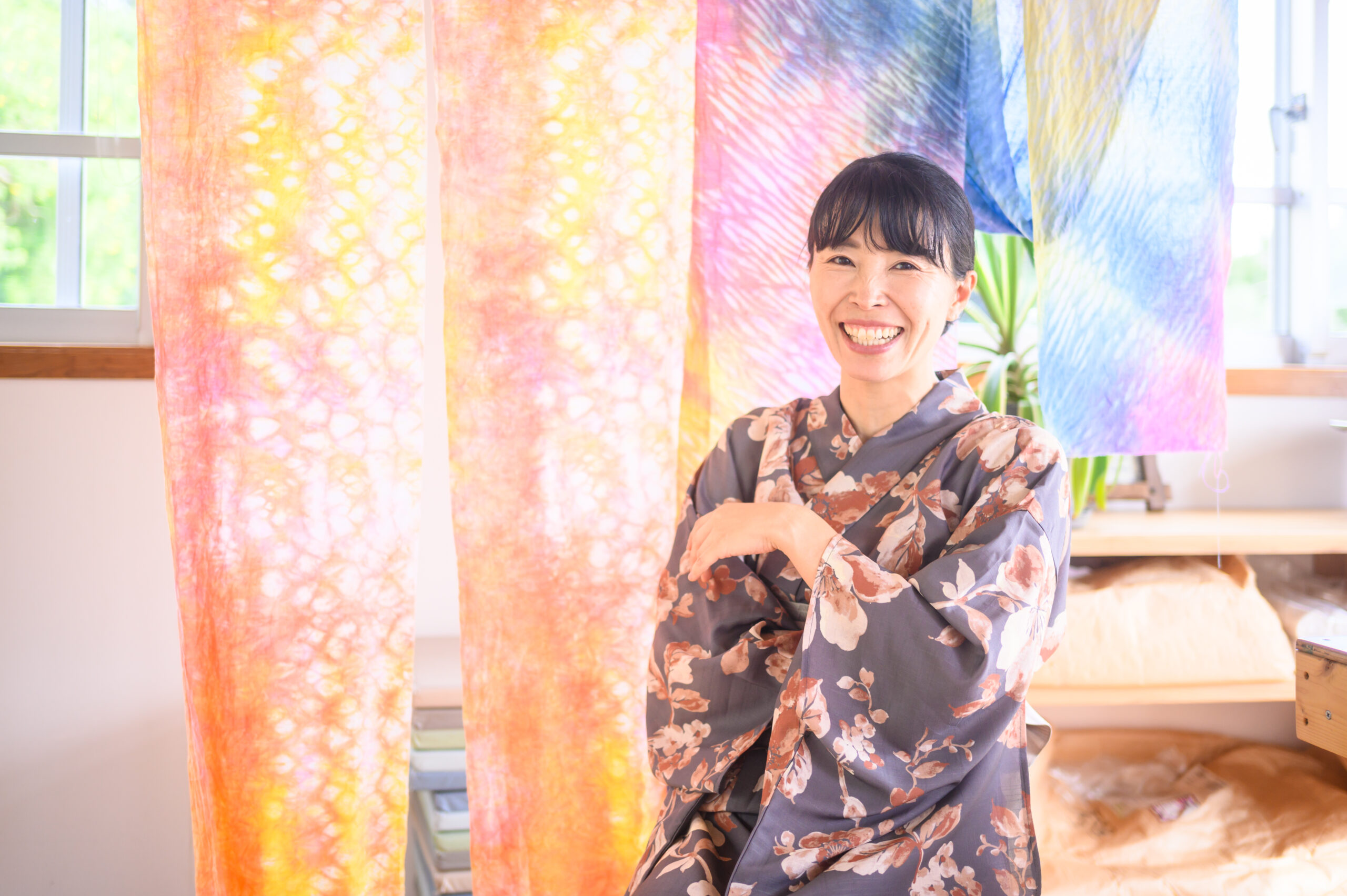
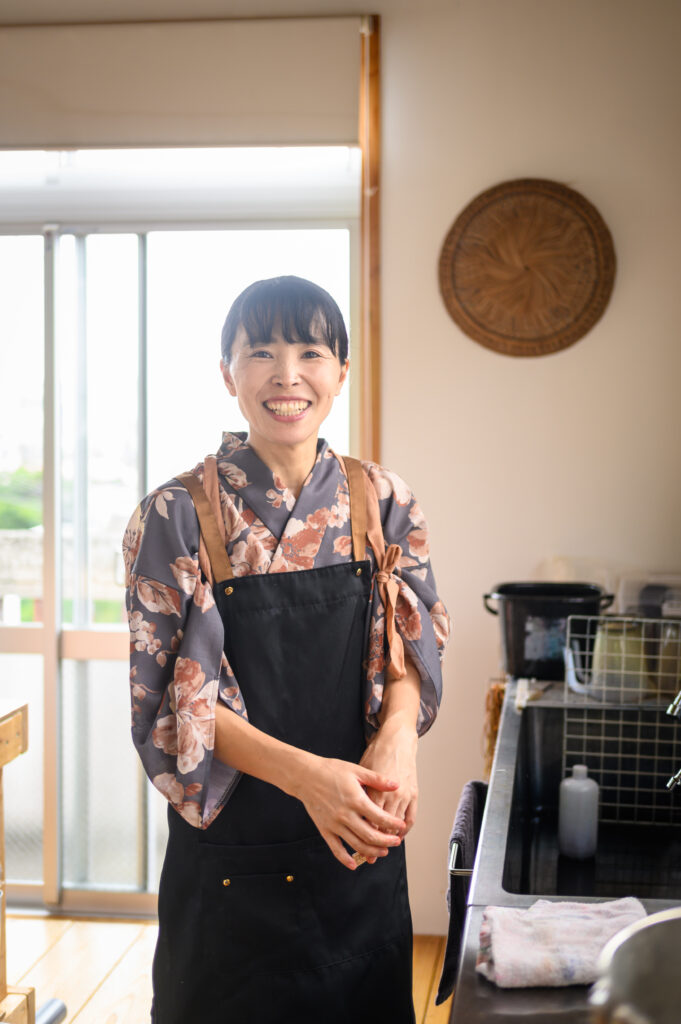
沖縄で、さらしを染めている人がいる。
知名直子さん。
さらし、と聞いて、今の暮らしの中ですぐに何かが浮かぶ人は、どれくらいいるのだろう。
昔は、台所で使われたり、妊婦さんのお腹に巻かれたり、赤ちゃんを抱く布として使われたりしていた。
暮らしの中に、当たり前のようにあった白い布である。
けれど今は、日常の中でさらしを見かけることは、ずいぶん少なくなっている気がする。
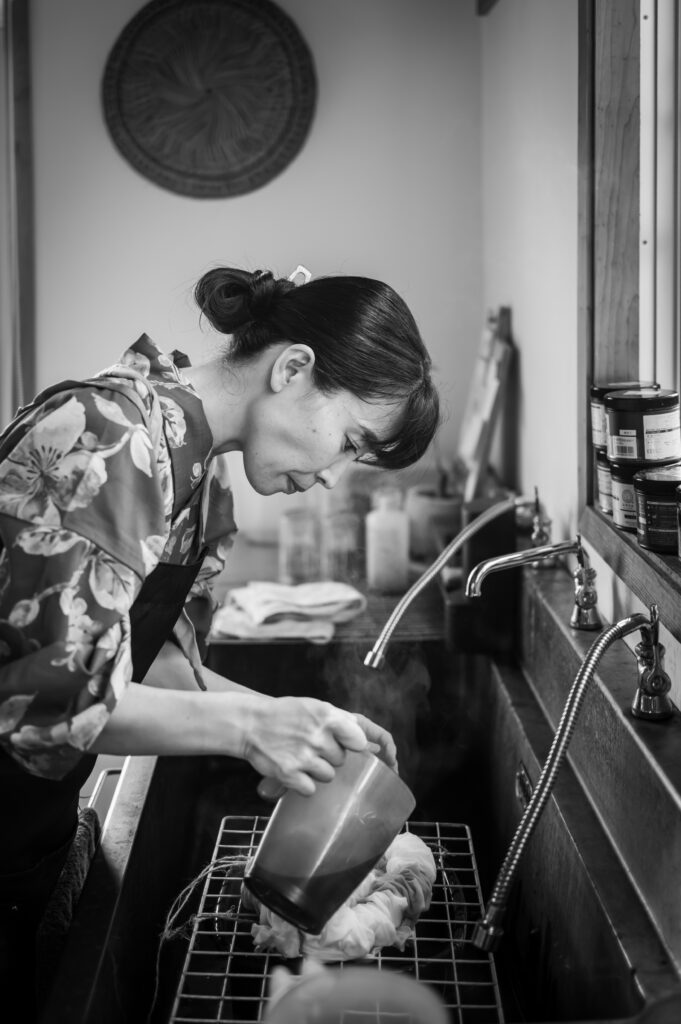
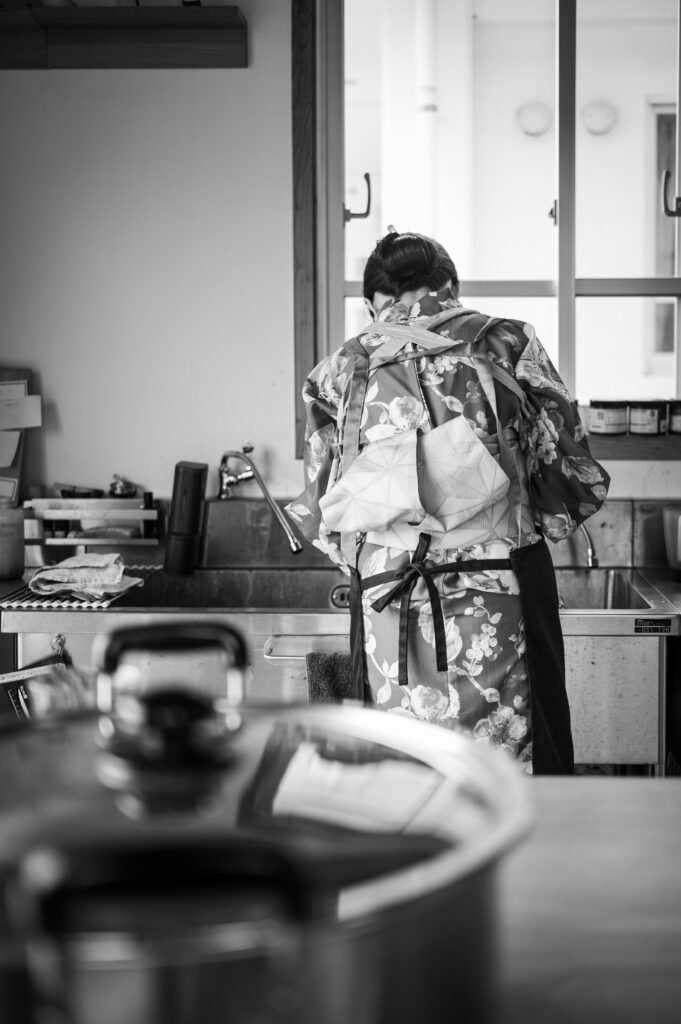
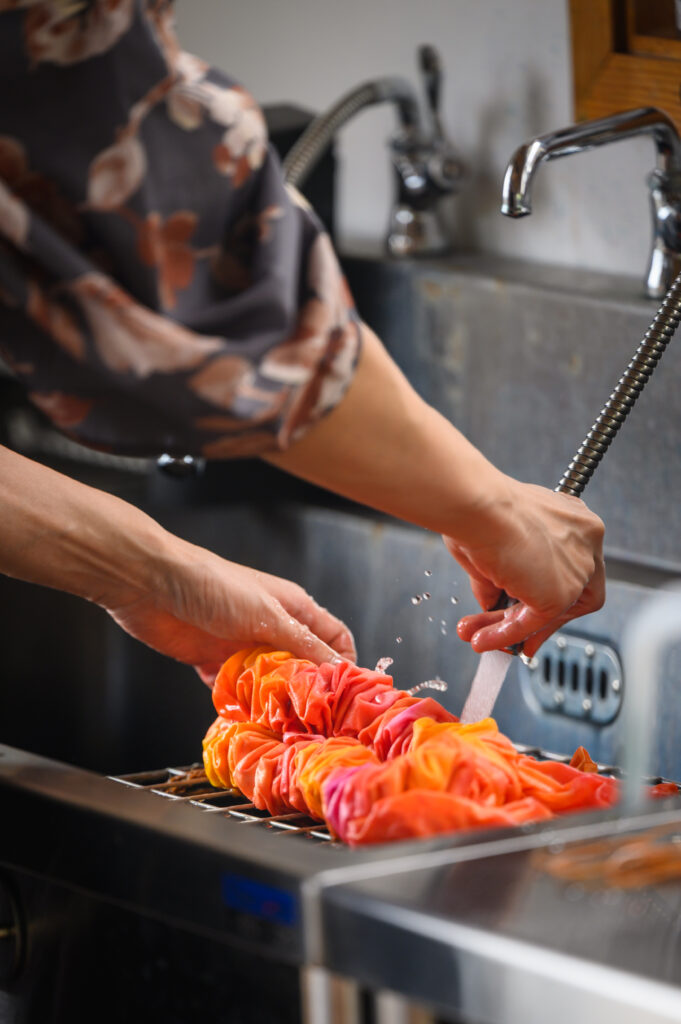
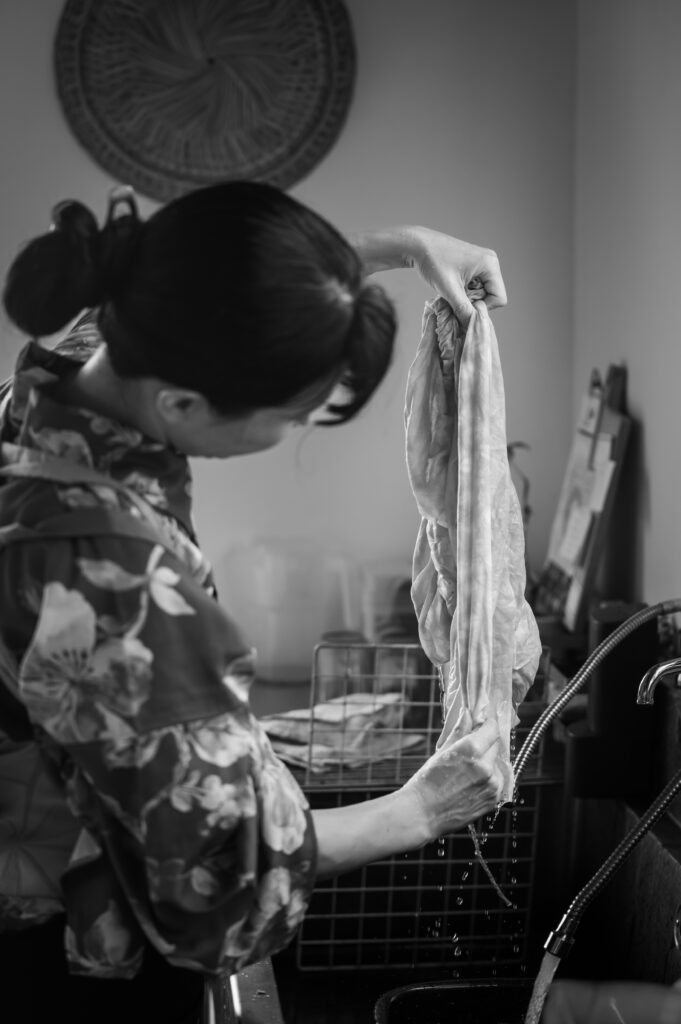
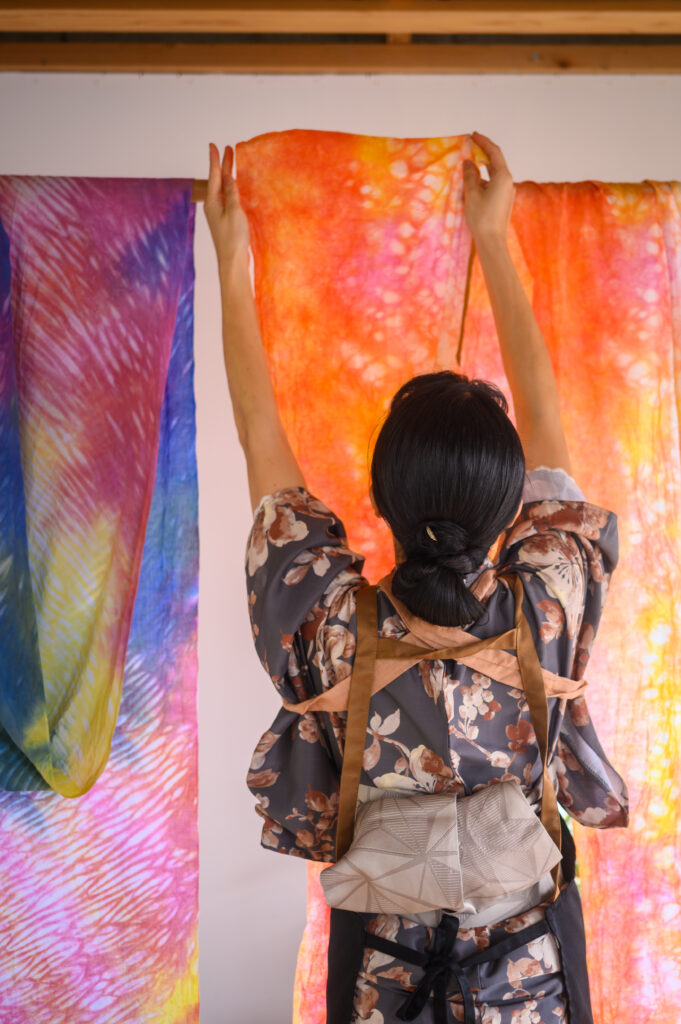
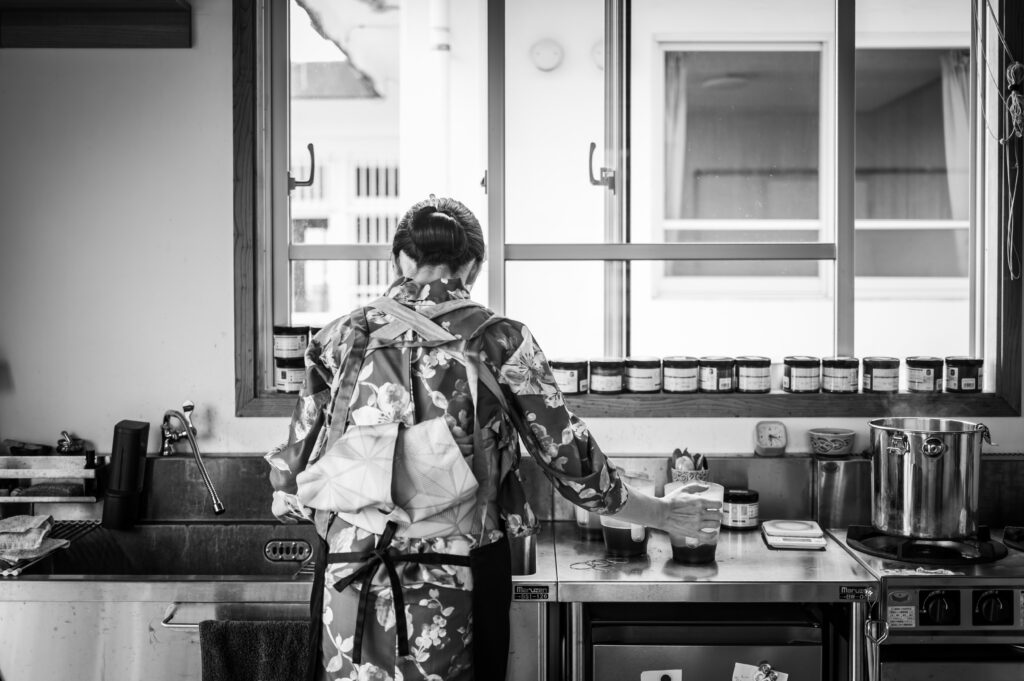
知名さんは、そのさらしを染めている。
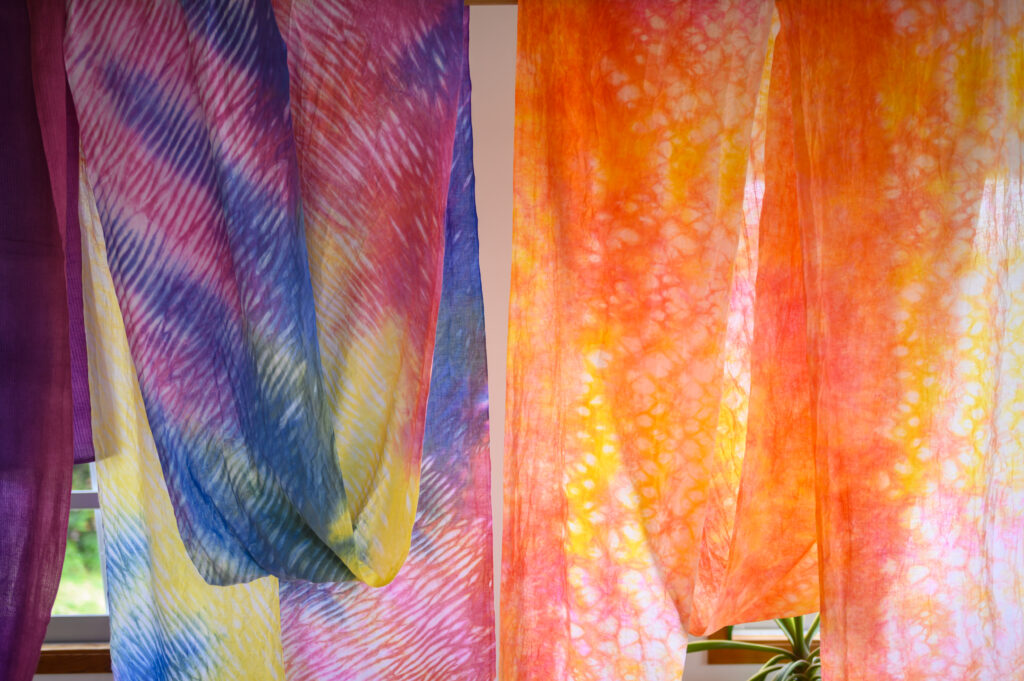
海の泡。
珊瑚。
波。
南国の色。
沖縄で見た景色や、海の中で感じたもの、自然の揺らぎが、布の上にのっている。
でも、これはただ綺麗な布を作っている話ではない。
知名さんが染めているのは、さらしでありながら、さらしだけではない。
子どもを抱く時間。
親子の距離。
人から人へ渡される知恵。
そして、命のそばに文化があるということ。
知名さんの話を聞きながら、私は、この人は布を染めているけれど、本当は文化の入口をつくっている人なのかもしれないと思った。
知名さんがさらしに出会ったきっかけは、子育てだった。
もともと岐阜出身で、雪山に親しんできた人だという。
スノーボードやバックカントリー。
自然の中で体を使って過ごしてきた人。
母になった時、子どもと一緒に山へ行きたいと思った。
けれど、市販のベビーキャリーは重かった。
本体だけで重い。
そこに子どもの重さが加わる。
さらに水や荷物も増える。
「これでは登れない」
そう感じた時に、さらしにたどり着いたという。
「さらしは軽いんです。布そのものに重さがないし、薄いから、その上からリュックも背負えるんです。汗も吸ってくれるし、いざという時にも使えます」
入口は、とても実用的だったのだと思う。
でも、知名さんのさらしは、そこだけで終わらなかった。
実用から始まったものが、いつしか親子の時間になり、人とのつながりになり、そして文化を次の世代へ手渡していくものになっていった。
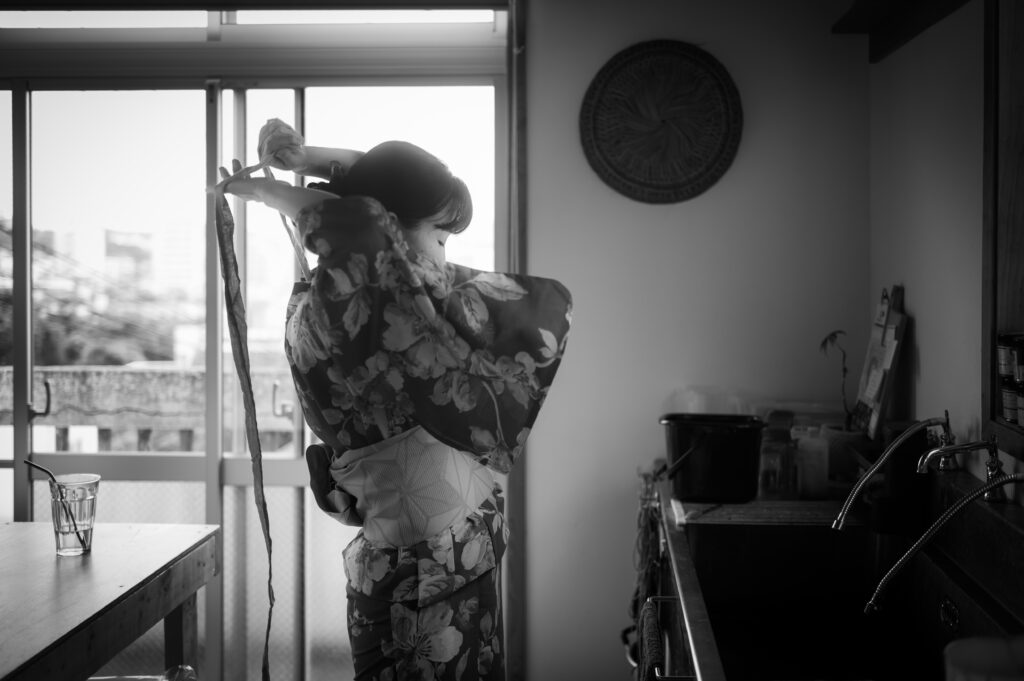
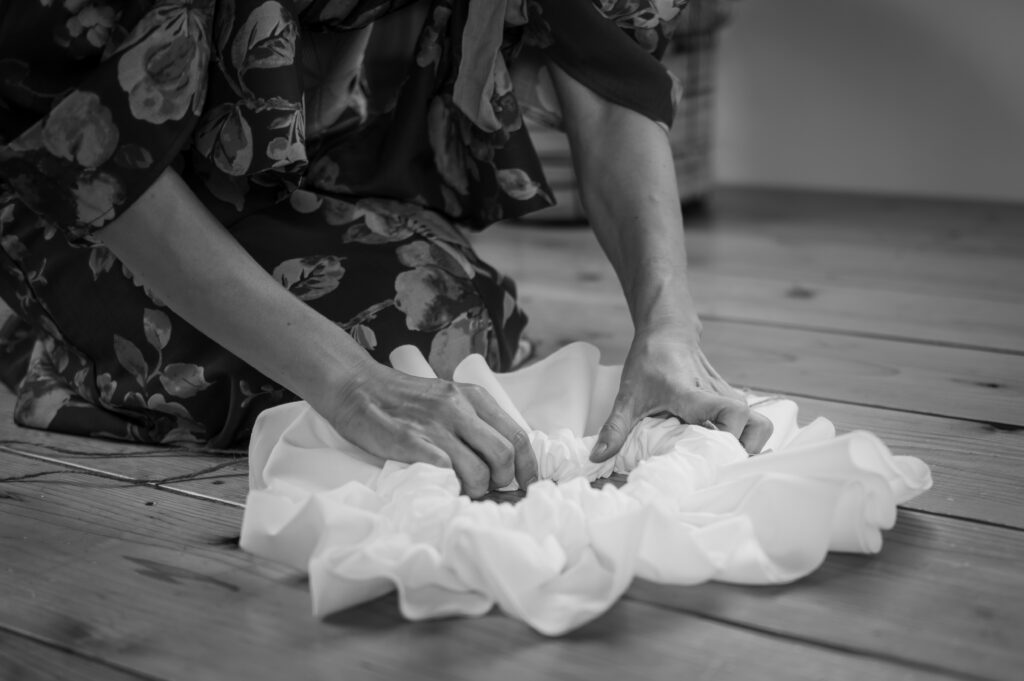
さらしで子どもを抱く時間について、知名さんはこう話してくれた。
「子どもの顔がすぐ近くにあるんです。ここで会話しているような感じがあるんですよね」
子どもはまだ言葉を話せない。
でも、顔が近い。
気配が近い。
同じものを見る。
同じ目線で歩く。
「同じものを見て、同じ目線で捉えて歩く。その一体感がすごくあるんです」
この言葉が、すごく残った。
さらしは、便利な道具とは少し違う。
最初は、少し難しい。
巻き方を覚える必要がある。
手を後ろに回して、結んで、体で覚えていく。
「シンプルだからこそ、体を使って覚えていく作業が必要なんです。その過程が、とても大事だと思っています」
「子どもにそれだけ時間をかけていたという、その時間そのものが、子育てにとって一番大事だと思うんです」
私はこの話を聞いて、さらしは赤ちゃんを運ぶためだけの布ではないのだと思った。
子どもに時間をかけるための布。
親が、自分の体を使って親になっていくための布。
親子の間にある目に見えないものを、少し濃くする布。
そういうものなのだと思った。
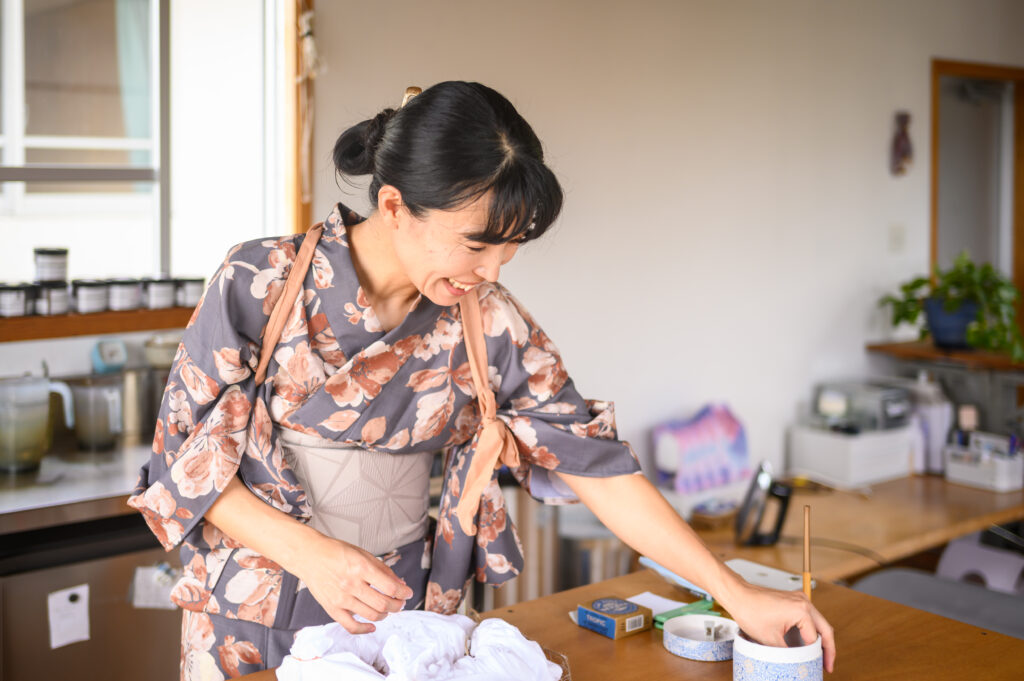
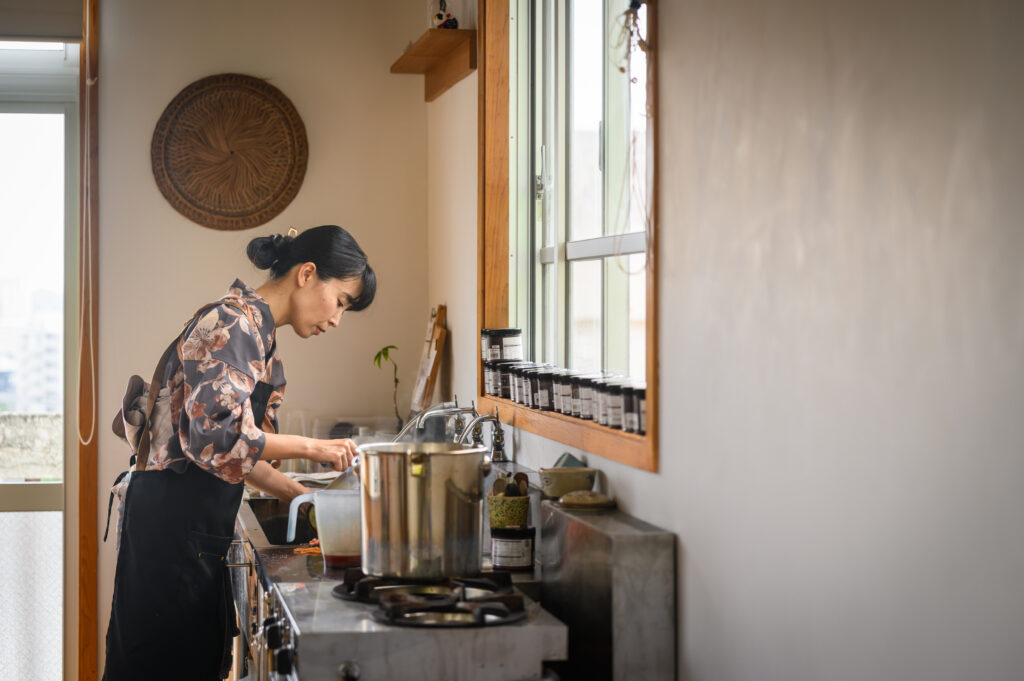
さらしは、ひとりでは完結しない。
知名さんは、さらしを通して人とのつながりも生まれたと話していた。
「難しいと思うことがあるから、人に聞くんです。同じことをしている友達と練習したり、染め物を一緒にしたりする。そこにコミュニティが生まれるんです」
便利なものは、一人で使えてしまう。
それはもちろん、ありがたいことでもある。
でも、さらしは、人に聞く。
教えてもらう。
一緒に練習する。
一緒に染める。
そこに、人と人との時間が生まれる。
「その時にできた友達が、私にとっては一番色濃い友達関係だったと思います」
この話は、沖縄の子守節の話ともつながる気がした。
子育ては、本来ひとりで抱え込むものではなかったのかもしれない。
誰かが子どもを見て、誰かが声をかけ、誰かが歌い、誰かが手を貸す。
子どもを真ん中にして、人がつながっていく。
知名さんのさらしには、その感覚がある。
母親だけが頑張るための布ではなく、人と人が出会い、教え合い、助け合うための布でもある。
それは、子育てを通して人がつながっていく文化そのものなのだと思う。
知名さんは、実家のある沖縄へ帰ってきた。
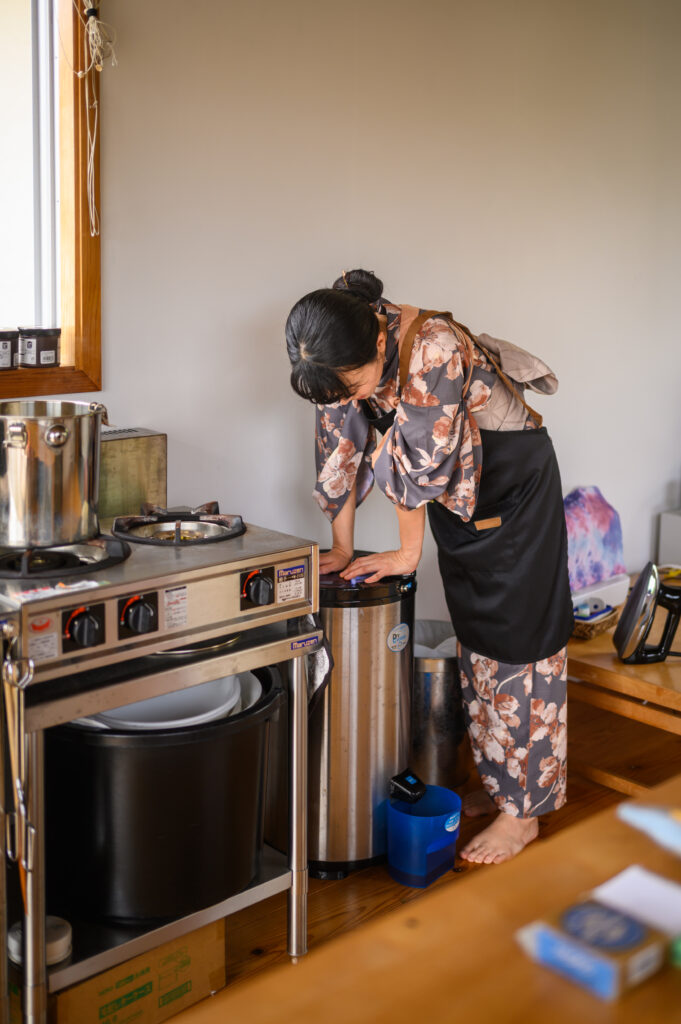
そして沖縄で工房を開き、さらしを染める活動を続けている。
沖縄でさらしを使うことについて、知名さんは気候的にも合っていると話していた。
「沖縄は暑くて高温多湿ですよね。その中で散歩したり、遊んだりする時に、さらしは布一枚だから汗を吸ってくれるし、すぐ乾くんです」
沖縄の暑さ。
湿度。
強い日差し。
子どもと外へ出る時間。
その中で、さらしという一枚の布は、厚みのある抱っこ紐とは違う軽さを持っている。
そして、沖縄には子育てをみんなでしていくような空気が、まだ残っているように感じる。
人と人との距離が近い。
子どもを見守る目がある。
声をかけ合う場がある。
知名さんのさらしは、そういう沖縄の空気とも、どこか自然に重なっているように感じた。
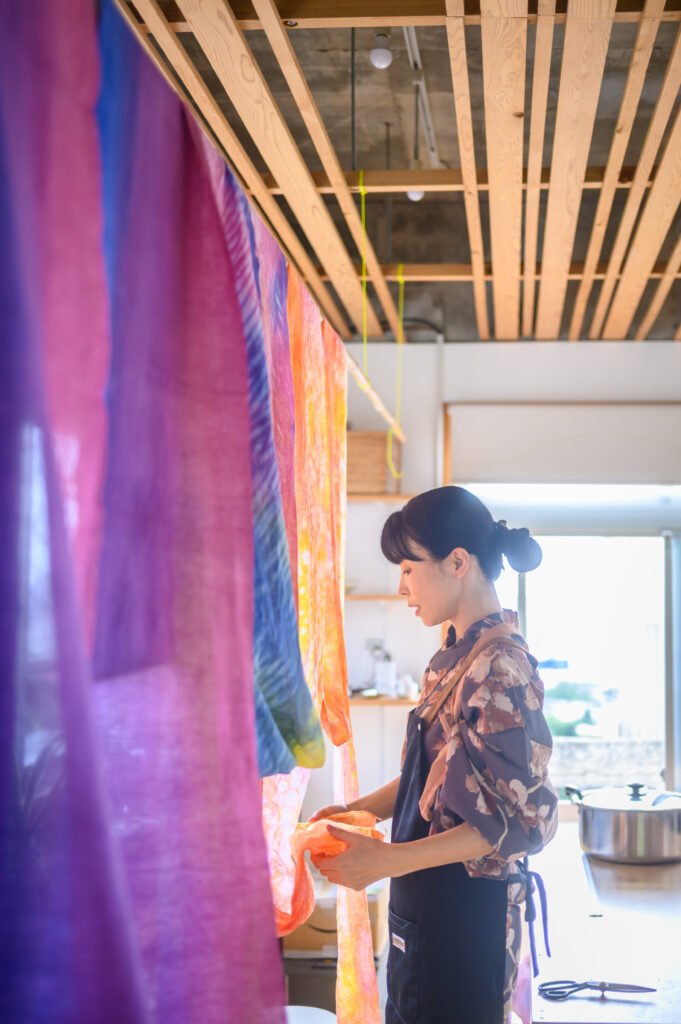
知名さんのさらしには、沖縄の景色がのっている。
「私がデザインしているものは、全部沖縄の自然をイメージしています」
そう話しながら、知名さんは、海に潜った時のことを教えてくれた。
「海に潜って珊瑚を見た時に、この珊瑚を表現したいと思ってできたのが、珊瑚というシリーズです」
また、海の中から水面を見上げた時の泡を、さらしにしたいと思って生まれたシリーズもある。
「海に潜って水面を見上げた時に、海の泡をさらしにしてみたいと思ってできたのが、泡というシリーズです」
この話を聞いていて、知名さんは沖縄を“柄”にしているわけではないのだと思った。
海に入る。
水面を見上げる。
珊瑚を見る。
波を見る。
その時に自分が受け取ったものを、布にのせている。
だから、知名さんのさらしには、ただの模様以上のものがある。
そこに、知名さんが見ている沖縄がある。
知名さんがこの土地で感じた景色がある。
そして今、知名さんは紅型に挑戦している。
紅型は、沖縄に伝わる染めの伝統工芸である。
日本の文化、中国の絵柄、さまざまな文化が混ざり合いながら、沖縄の中で育まれてきたもの。
知名さんは、紅型についてこう話していた。
「沖縄の紅型は面白いんです。いろいろな文化が入っていて、日本の着物の染めの文化も入っているし、中国の鳥のような絵柄も入っている。すごくミックスされているんです」
「伝統工芸だけど、表現はけっこう自由なんです。そういうところも沖縄らしいなと思います」
この視点が、とても知名さんらしいと思った。
伝統を、固く閉じたものとして見ていない。
守るものだけれど、止まっているものではない。
いろいろな文化が混ざり、沖縄の中で育ち、今の暮らしへつながっていくものとして見ている。
ただ、知名さんは今、紅型を修行している途中である。
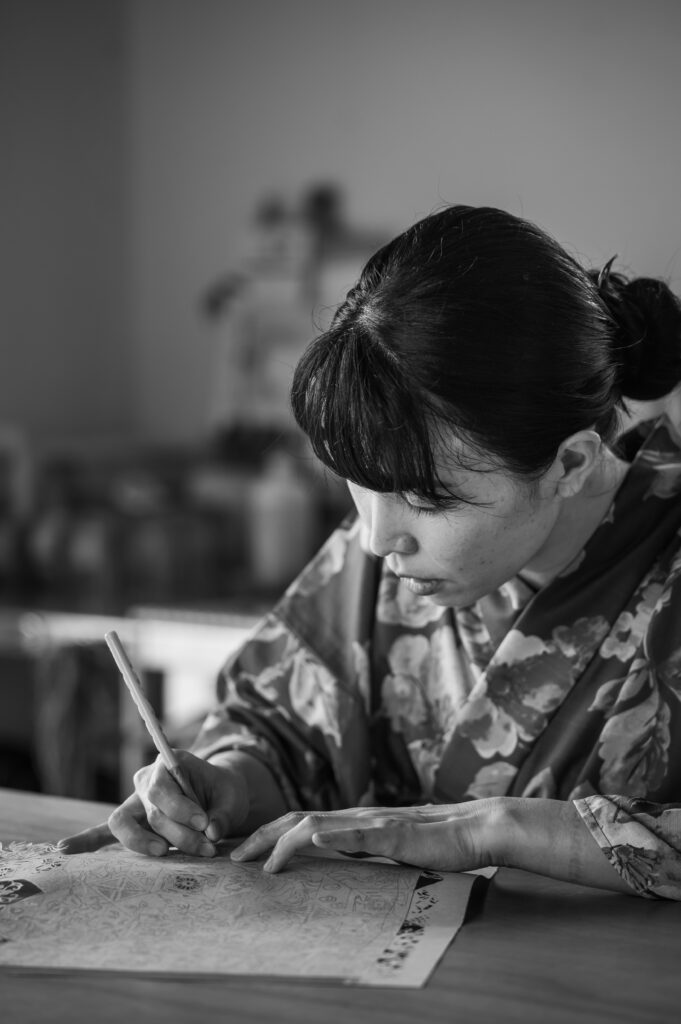
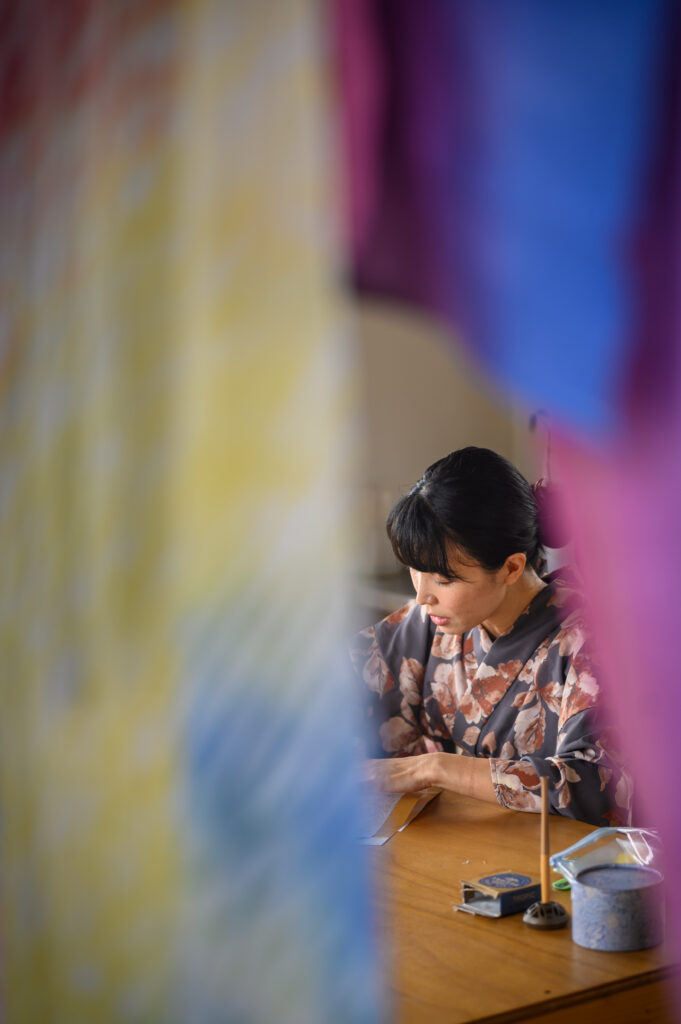
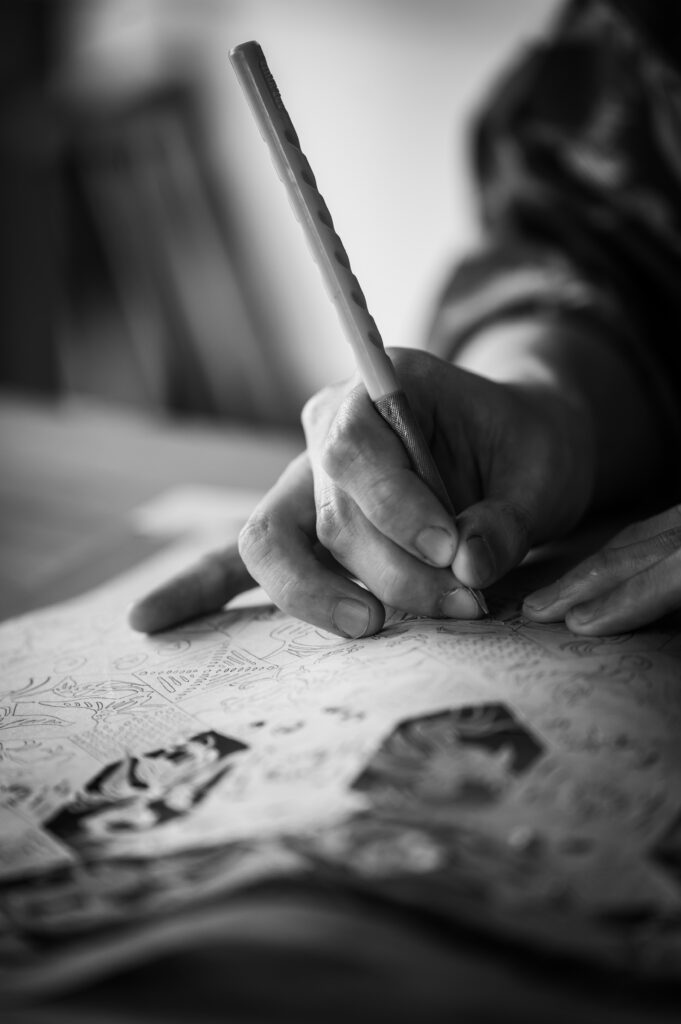
古典柄を学び、型を彫り、少しずつ手を動かしている段階だ。
「今は、型を彫って、そこに色を入れていく流れを学んでいるところです。まだ手探りですが、毎日彫っています」
完成されたものを見せる前の、途中の時間。
文化を継ごうとしている人が、今まさに学び、手を動かしている時間。
私は、そこに知名さんの生き様が出ている気がした。
知名さんが紅型をさらしに取り入れようとしているのは、ただ沖縄らしいものを作りたいからではない。
もっと深いところにある。
「もともと、日本の伝統工芸や伝統文化、着物のようなものが好きなんです」
でも、そういうものは少しハードルが高い。
特に子育て中は、遠くなってしまいやすい。
けれど本当は、命が生まれる時こそ、文化はそばにあっていいのではないか。
「命が生まれる時って、ご先祖様からのつながりを感じる瞬間でもあると思うんです」
この言葉を聞いた時、ああ、ここなんだなと思った。
知名さんがやっていることの芯は、ここにある。
赤ちゃんを抱く布に、文化をのせる。
命のそばに、伝統を置く。
特別な場所に飾るのではなく、暮らしの中で使うものとして、文化を次の世代へ手渡していく。
「沖縄で生まれて育っていく命が、昔から受け継がれてきた伝統文化を身につけている。それは、子どもにとっても自然に自分たちの文化に触れる機会になると思うんです」
この言葉は、知名さんの活動の真ん中にある気がする。
さらしを染める。
子どもを抱く。
沖縄の景色を布にのせる。
紅型を学ぶ。
文化を、命のそばへ戻していく。
そのひとつひとつが、知名さんの生き方なのだと思う。
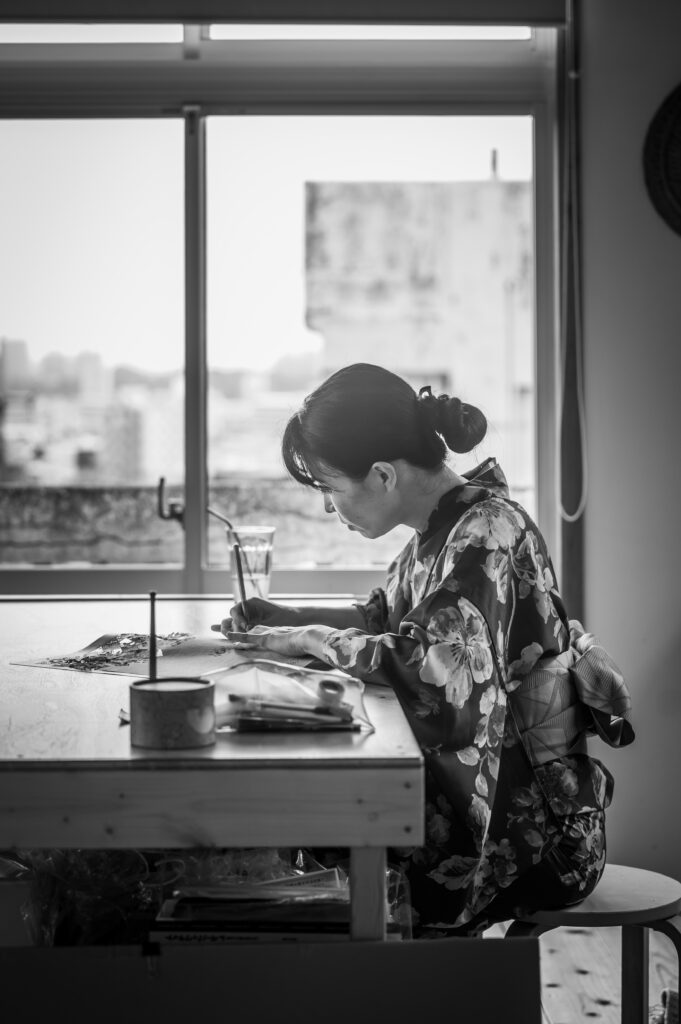
知名さんは、日本の伝統文化を大切にしたいと話していた。
それを、お腹に命を宿した瞬間から、子どもたちの代まで引き継いでいきたい、と。
「日本の伝統文化を大切にしたいと思っています。お腹に命を宿した瞬間から、自分の体の変化とともに、新しい命を引き継いでいくように、そこに文化も一緒にのせて、子どもたちの代まで引き継いでいきたいんです」
この言葉を聞いて、知名さんのさらしは、祈りに近いものなのだと思った。
でも、それは大げさな祈りではない。
生活の中にある祈りである。
子どもを抱く時。
布を染める時。
沖縄の海を見た時。
昔から続いてきたものを、次に渡したいと思う時。
文化を守る、というと大きな言葉になる。
でも知名さんのやっていることは、もっと体温がある。
さらしを染める。
子どもを抱く。
人に教える。
一緒に染める。
沖縄の景色を布にのせる。
紅型を学ぶ。
そして、次の命へ渡す。
そのひとつひとつが、文化をつなぐことになっている。
そしてたぶん、知名さんの見ている先は、沖縄の中だけではない。
日本の伝統文化を、子育てや暮らしの中に戻していく。
そして、それを世界にも広げていく。
さらしという布は、日本の昔の暮らしの中にあったものだけれど、そこに込められているものは、日本だけに閉じたものではないと思う。
子どもを抱くこと。
命を感じること。
自然の景色をまとうこと。
文化を次の世代へ手渡すこと。
それはきっと、どこの国の人にも届くものだ。
知名さんは、沖縄の景色を布にのせながら、文化をもう一度、命のそばへ戻そうとしている。
その布は、赤ちゃんを抱く。
親子の時間を包む。
人と人をつなぐ。
そして、昔から続いてきた文化を、未来へ運んでいく。
知名直子さんは、さらしを染めている。
でも本当は、
沖縄の景色を染めているのかもしれない。
命の記憶を染めているのかもしれない。
これから受け継がれていく文化の入口を、静かに染めているのかもしれない。
取材協力
知名直子(ちな なおこ)
沖縄さらしおんぶ
website: https://okinawasarashi.com/
Instagram: https://www.instagram.com/okinawa_sarashionbu/
ENGLISH
Carrying the Scenery of Okinawa on Cloth, Passing Culture Forward
Sarashi That Exists Alongside Life
In Okinawa, there is a woman who dyes sarashi.
Her name is Naoko China.
When people hear the word sarashi, I wonder how many can still picture it in their everyday lives.
In the past, sarashi was used in kitchens, wrapped around the belly during pregnancy, and used as a cloth to carry babies.
It was a simple white cloth that once existed naturally within daily life.
But today, we do not see sarashi so often anymore.
Naoko dyes that sarashi.
Sea foam.
Coral.
Waves.
Tropical colors.
The scenery she has seen in Okinawa, the things she has felt in the sea, the movement of nature itself seem to rest upon the cloth.
But this is not simply a story about making beautiful fabric.
What Naoko dyes is sarashi, but at the same time, it is more than sarashi.
The time spent holding a child.
The closeness between parent and child.
Wisdom passed from one person to another.
And the idea that culture can exist right beside life.
As I listened to Naoko speak, I felt that although she is dyeing cloth, what she is really creating may be an entrance back into culture.
────────────────────
Naoko first encountered sarashi through child-rearing.
She is originally from Gifu, and she grew up close to snowy mountains.
Snowboarding.
Backcountry riding.
A life of moving through nature with her whole body.
When she became a mother, she wanted to go to the mountains with her child.
But the baby carriers available at the time were heavy.
The carrier itself was heavy.
Then the weight of the child was added.
Then water and other belongings.
“I realized I wouldn’t be able to climb like that.”
That was when she found sarashi.
“Sarashi is light. The cloth itself has almost no weight, and because it is thin, I can still wear a backpack over it. It absorbs sweat, and it can be used in emergencies too.”
At first, it began from a very practical need.
But Naoko’s sarashi did not end there.
What began as something practical gradually became time shared between parent and child, a way of connecting with others, and a way to pass culture on to the next generation.
────────────────────
Naoko spoke about the experience of holding a child with sarashi.
“The child’s face is right there, so close. It feels almost like we are having a conversation here.”
The child cannot yet speak.
But the face is close.
The presence is close.
They look at the same things.
They walk from the same point of view.
“We see the same things and take them in from the same eye level. There is such a strong feeling of togetherness.”
Those words stayed with me.
Sarashi is a little different from a convenient tool.
At first, it is not so easy.
You have to learn how to wrap it.
You move your hands behind your back.
You tie it.
You learn it with your body.
“Because it is simple, you have to learn it through your body. I think that process itself is very important.”
“The fact that I spent that much time with my child — that time itself is what I feel is most important in child-rearing.”
Listening to her, I felt that sarashi is not just a cloth for carrying a baby.
It is a cloth for giving time to a child.
A cloth through which a parent uses their own body to become a parent.
A cloth that makes the invisible bond between parent and child a little deeper.
That is what it seemed to be.
────────────────────
Sarashi is not something that ends with one person alone.
Naoko said that sarashi also created connections with others.
“Because there are moments when you think, ‘This is difficult,’ you ask someone. You practice with friends who are doing the same thing, or dye cloth together. That is where community is born.”
Convenient things can often be used alone.
Of course, that is something to be grateful for too.
But sarashi makes you ask someone.
It makes you learn from someone.
It makes you practice together.
It makes you dye together.
And there, time between people is born.
“The friends I made during that time were some of the deepest friendships of my life.”
This story also made me think of Okinawan lullabies and songs of child-minding.
Perhaps child-rearing was never meant to be carried alone.
Someone watches the child.
Someone speaks to them.
Someone sings.
Someone lends a hand.
With the child at the center, people become connected.
Naoko’s sarashi carries that feeling.
It is not a cloth meant for mothers to struggle harder alone.
It is also a cloth through which people meet, teach one another, and help one another.
To me, it feels like a culture where people connect through child-rearing itself.
────────────────────
Naoko returned to Okinawa, where her family roots are.
There, she opened her studio and continued her work of dyeing sarashi.
She says sarashi is also well suited to Okinawa’s climate.
“Okinawa is hot and humid. When you go for walks or play outside, sarashi is just one layer of cloth, so it absorbs sweat and dries quickly.”
Okinawan heat.
Humidity.
Strong sunlight.
Time spent outside with children.
In that environment, a single piece of sarashi carries a lightness that thicker baby carriers do not have.
And in Okinawa, I feel there is still an atmosphere of raising children together.
People are close to one another.
There are eyes watching over children.
There are places where people call out to each other.
Naoko’s sarashi seems to overlap naturally with that Okinawan air.
────────────────────
Naoko’s sarashi carries the scenery of Okinawa.
“The designs I make are all inspired by Okinawan nature.”
As she said this, she told me about diving into the sea.
“When I dove into the sea and saw the coral, I wanted to express that coral. That became my Coral series.”
There is also a series born from the image of looking up at the surface of the water from beneath the sea.
“When I dove into the sea and looked up at the surface, I wanted to turn the sea foam into sarashi. That became the Foam series.”
Listening to this, I felt that Naoko is not simply turning Okinawa into patterns.
She enters the sea.
She looks up at the surface.
She sees coral.
She watches waves.
What she receives in that moment, she places onto the cloth.
That is why her sarashi carries something more than a pattern.
Within it, there is the Okinawa that Naoko sees.
There is the scenery she has felt while living on this land.
────────────────────
Now, Naoko is also taking on the challenge of Bingata.
Bingata is a traditional dyeing craft from Okinawa.
It is a craft that has been nurtured in Okinawa through the mingling of Japanese culture, Chinese motifs, and many other cultural influences.
Naoko spoke about Bingata in this way.
“Okinawan Bingata is fascinating. It contains many different cultures. There is the dyeing culture of Japanese kimono, and there are motifs like Chinese birds. It is very mixed.”
“It is a traditional craft, but its expression is quite free. I think that freedom feels very Okinawan.”
That perspective felt very much like Naoko.
She does not see tradition as something closed and rigid.
It is something to be protected, but not something that has stopped moving.
It is something that has mixed with many cultures, grown within Okinawa, and continues into present-day life.
But Naoko is still in the middle of learning Bingata.
She is studying traditional patterns, carving stencils, and slowly moving her hands through the process.
“Right now, I am learning the flow of carving the stencil and then adding color. I am still feeling my way through it, but I carve every day.”
A time before the finished work is shown.
A time when someone who wants to carry culture forward is learning, practicing, and moving her hands.
I felt that this unfinished process itself reveals Naoko’s way of life.
────────────────────
Naoko is not trying to bring Bingata into sarashi simply to make something that looks Okinawan.
There is something deeper.
“I have always loved Japanese traditional crafts, traditional culture, and things like kimono.”
But those things can feel a little distant.
The threshold can feel high.
And during child-rearing, they can become even farther away.
But perhaps culture should be close precisely when life is born.
“When a new life is born, I think it is also a moment when we feel our connection to our ancestors.”
When I heard those words, I felt: this is the heart of it.
This is the core of what Naoko is doing.
She places culture on the cloth that holds a baby.
She brings tradition close to life.
Not as something displayed in a special place, but as something used in daily living, something passed to the next generation.
“For a child born and raised in Okinawa to wear traditional culture that has been passed down for so long — I think that becomes a natural chance for the child to come into contact with their own culture.”
I feel that this sentence sits at the center of Naoko’s work.
Dyeing sarashi.
Holding a child.
Carrying Okinawan scenery on cloth.
Learning Bingata.
Returning culture to the side of life.
Each of these is part of Naoko’s way of living.
────────────────────
Naoko said she wants to cherish Japanese traditional culture.
She wants to pass it on from the moment a life is carried in the womb, all the way to the generation of children.
“I want to cherish Japanese traditional culture. From the moment a life is carried in the womb, as the body changes and a new life is passed on, I want culture to be carried along with it, all the way to the children’s generation.”
Hearing this, I felt that Naoko’s sarashi is close to a prayer.
But it is not an exaggerated prayer.
It is a prayer within daily life.
When holding a child.
When dyeing cloth.
When looking at the sea in Okinawa.
When wanting to pass on what has continued from long ago.
To say “protecting culture” can sound like a large and distant thing.
But what Naoko does has more body temperature than that.
She dyes sarashi.
She holds children.
She teaches people.
She dyes together with others.
She carries Okinawan scenery on cloth.
She learns Bingata.
And she passes it on to the next life.
Each of these small acts becomes a way of connecting culture.
────────────────────
And perhaps Naoko’s vision does not end within Okinawa.
She wants to return Japanese traditional culture to child-rearing and daily life.
And from there, to share it with the world.
Sarashi is a cloth that once existed in Japanese daily life, but what it carries is not something limited only to Japan.
Holding a child.
Feeling life.
Wearing the scenery of nature.
Passing culture to the next generation.
Surely, these are things that can reach people anywhere in the world.
Naoko carries the scenery of Okinawa onto cloth, and through that, she is trying to bring culture back to the side of life.
That cloth holds babies.
It wraps parent-child time.
It connects people to one another.
And it carries culture that has existed for generations into the future.
Naoko China dyes sarashi.
But perhaps what she is really dyeing is the scenery of Okinawa.
Perhaps she is dyeing the memory of life.
Perhaps she is quietly dyeing an entrance into the culture that will be passed forward from here.